Categories
Uncategorized

Quest for the Perfect Chocolate Chip Cookie

The chocolate chip cookie. To call it the perfect food may be a slight exaggeration, but it is definitely up there.  Many, if not most, Americans grew up with these treats; they are a strong piece of the American food identity. In fact, they are America’s favorite cookie: 53 percent of American adults prefer chocolate chip cookies, as opposed to peanut butter cookies (16 percent), oatmeal cookies (15 percent) or any other variety. Who doesn’t love a warm, ooey gooey chewy cookie oozing with melted chocolate?

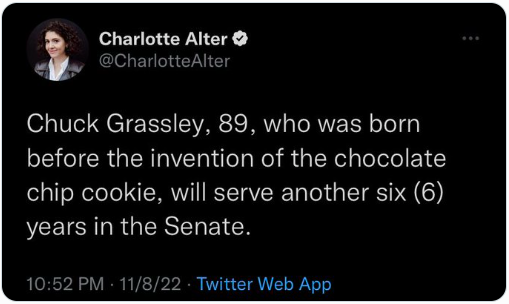
It’s hard to believe that the cookie is not even 100 years old. In fact, we have at least one politician currently serving in the U.S. Senate that is older than chocolate chip cookies, as Twitter user Charlotte Alter informed us.
Ballotpedia runs an annual Holiday Cookie election, and in 2022, the chocolate chip cookie ran as the incumbent “nom-nominee,” though it unfortunately didn’t make it past the primary this time. It was first elected Official Holiday Cookie in 2019, holding the office for a single term. In 2021, Chocolate Chip Cookie was re-elected after Sugar Cookie was recalled.

The chocolate chip cookie even has its own special day: August 4 is National Chocolate Chip Cookie Day. The day is celebrated by making and/or eating chocolate chip cookies. Mark your calendars!

History of the Cookie

In 1938, Ruth Graves Wakefield decided to offer something a little different to the guests of the Toll House Inn in Whitman, Mass., which she and her husband owned. She and chef Sue Brides chopped up a Nestlé semi-sweet chocolate bar and added it to a cookie batter, creating what they called the Toll House Chocolate Crunch Cookie, which was intended to accompany ice cream.

For years, rumors have abounded that the creation of the chocolate chip cookie was an accident. These stories claim that Wakefield expected the chocolate to melt and create a chocolate cookie, only to be surprised at the result. But that isn’t the case. The Chocolate Crunch Cookie was an intentional creation.

Wakefield would later give the recipe to Nestlé, reportedly for the price of $1 plus a lifetime supply of chocolate, though Wakefield claimed that she never received that dollar. She did get the chocolate, though.

Nestlé printed the recipe on the packaging of the semi-sweet chocolate bar and also offered a tool to break the bar into pieces to be used in the buyer’s own cookies, before eventually creating the modern-day chocolate chip in 1941.

Sue Brides’ daughter, Peg, shared the original recipe with Maria Stephanos of WCVB of Boston in 2017. The recipe is not the same one that we see on the Nestlé Toll House chocolate chips bags now: the proportions are different and even some ingredients are different.

Unfortunately, the Toll House Inn burned down from a fire that began in the kitchen on New Year’s Eve of 1984. The Inn was not rebuilt. Instead, a Wendy’s now sits in that space, but a historical marker and commemorative plaque mark the site.
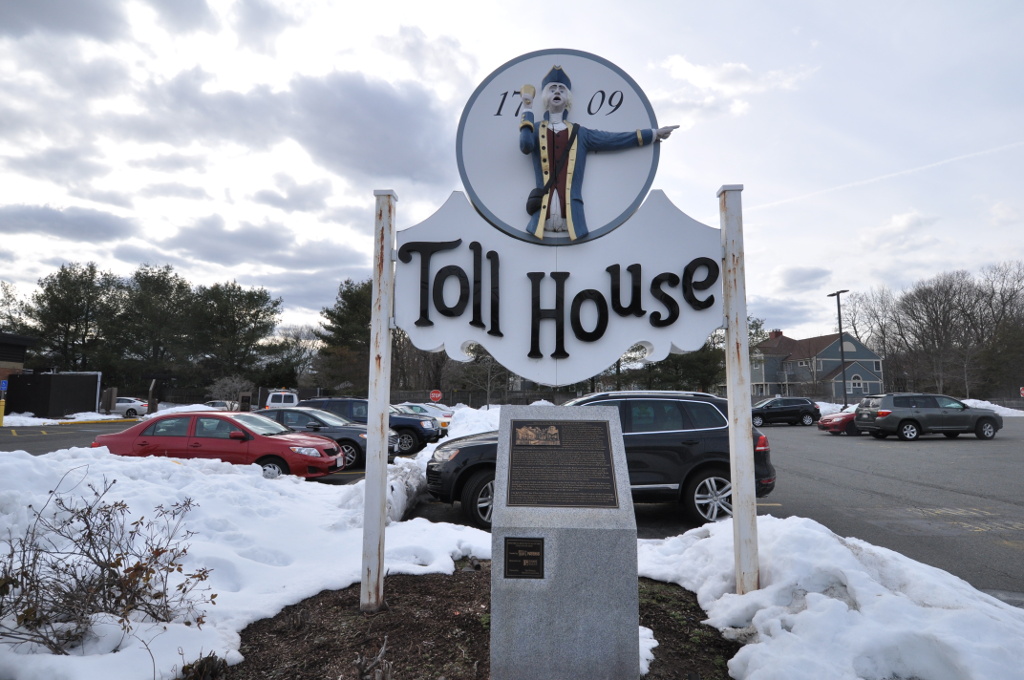
Toll House Inn sign and commemorative plaque by Magicpiano – Own work, CC BY-SA 4.0, https://commons.wikimedia.org/w/index.php?curid=67655422

Timeline of the Cookie

1938

Creation of the Cookie

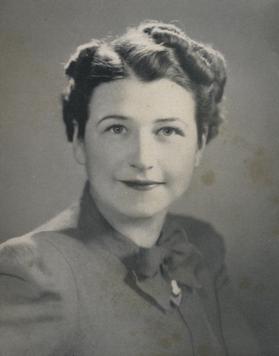
Ruth Graves Wakefield and Sue Brides create the “Toll House Chocolate Crunch Cookie” in the Toll House Inn kitchen, located in Whitman, Mass.

Ruth Graves Wakefield Image by http://theaesthetecooks.wordpress.com/tag/ruth-graves-wakefield/, Fair use, https://en.wikipedia.org/w/index.php?curid=40125741

1938

Publishing the Recipe

The Toll House Chocolate Crunch Cookie recipe is published in an updated version of Wakefield’s cookbook Toll House Tried and True Recipes. The recipe became so popular, it was featured on the Betty Crocker radio program.

3/20/1939

Sold to Nestlé

Wakefield sells the recipe to Nestlé for a dollar plus a lifetime supply of chocolate.

1941-1945

Wartime Sharing

Care packages containing chocolate chip cookies were sent to servicemen overseas, who shared them with their fellow soldiers. These soldiers then requested cookies from their families, who requested the recipe from Wakefield, spreading the chocolate chip cookie from the east coast to across the country.

1950s

Make Some Dough

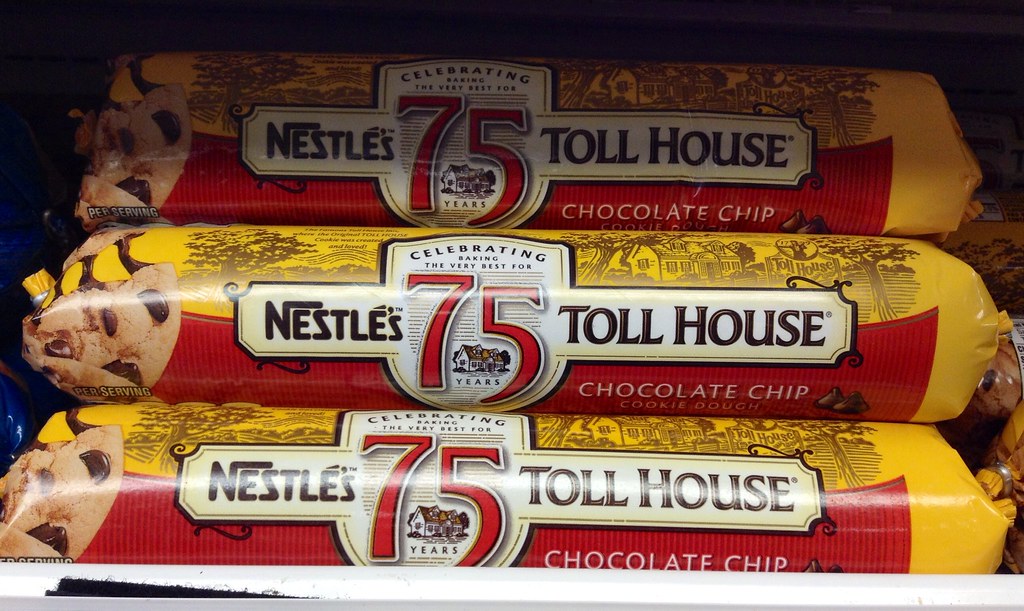
Nestlé and Pillsbury both begin selling refrigerated chocolate chip cookie dough in grocery stores.

“Nestlé Toll House Cookie Dough Chocolate Chip Cookies, 75th Anniversary, 7/2014, pic by Mike Mozart of TheToyChannel and JeepersMedia on YouTube. #Nestle #Toll #House #Cookies #Dought #Chocolate #Chips” by JeepersMedia is licensed under CC BY 2.0.

1955

Patent

General Mills files the first patent for a dry cookie mix.

1956

Heading Overseas

Chocolate chip cookies are first sold in the UK by Maryland Cookies.

1959

New Chips

Lemon-flavored chips are introduced, leading to other flavored chips and variations in the chocolate chip cookie, including peanut butter, white chocolate and toffee

1963

Chips Ahoy!

Nabisco launches their Chips Ahoy! line of packaged cookies in supermarkets.

1969
Cookie Monster

The then-unnamed cookie-obsessed monster makes his debut on Sesame Street.

“Cookie Monster Avatar” by @NonprofitOrgs is licensed under CC BY 2.0.

1969

Hershey Chips In

Hershey introduces “Semi-Sweet Chocolate Chips,” their version of chocolate morsels.

1975

Cookie Stand

Wally Amos, AKA “Famous Amos,” sets up a cookie stand on Sunset Boulevard. He receives funding from friends, including Marvin Gaye and Helen Reddy.

1977
Cookie Crisp

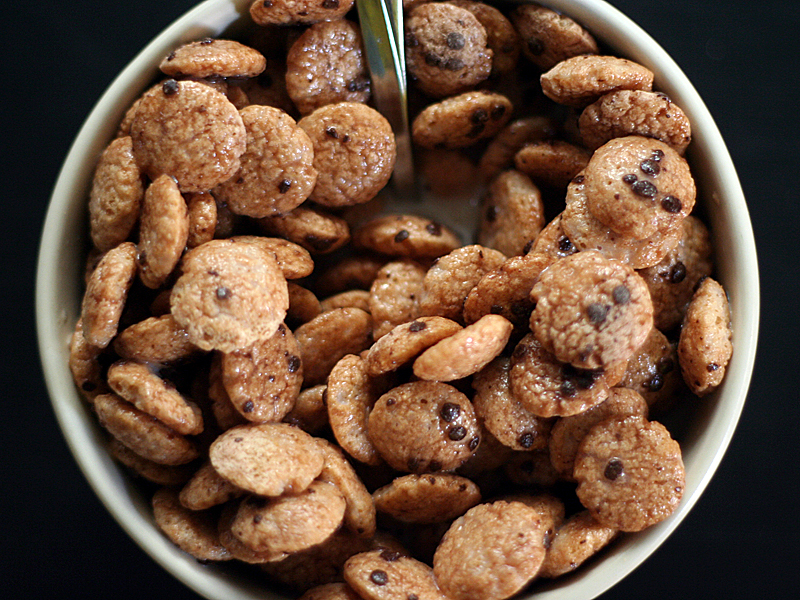
Ralston debuts Cookie Crisp cereal, manufactured to look like chocolate chip cookies. Mascot Cookie Jarvis is a wizard who magically changes cookie jars into cereal bowls.

“Cookie-crisp-above” by Tim Skillern is licensed under CC BY 3.0.

1977
Mrs. Fields

Debbi Fields opens her first store in Palo Alto, Calif., selling freshly baked cookies. Mrs. Fields is said to have debuted the first cookie cake.

“Mrs Fields” by Thomas Hawk is licensed under CC BY-NC 2.0.

1977
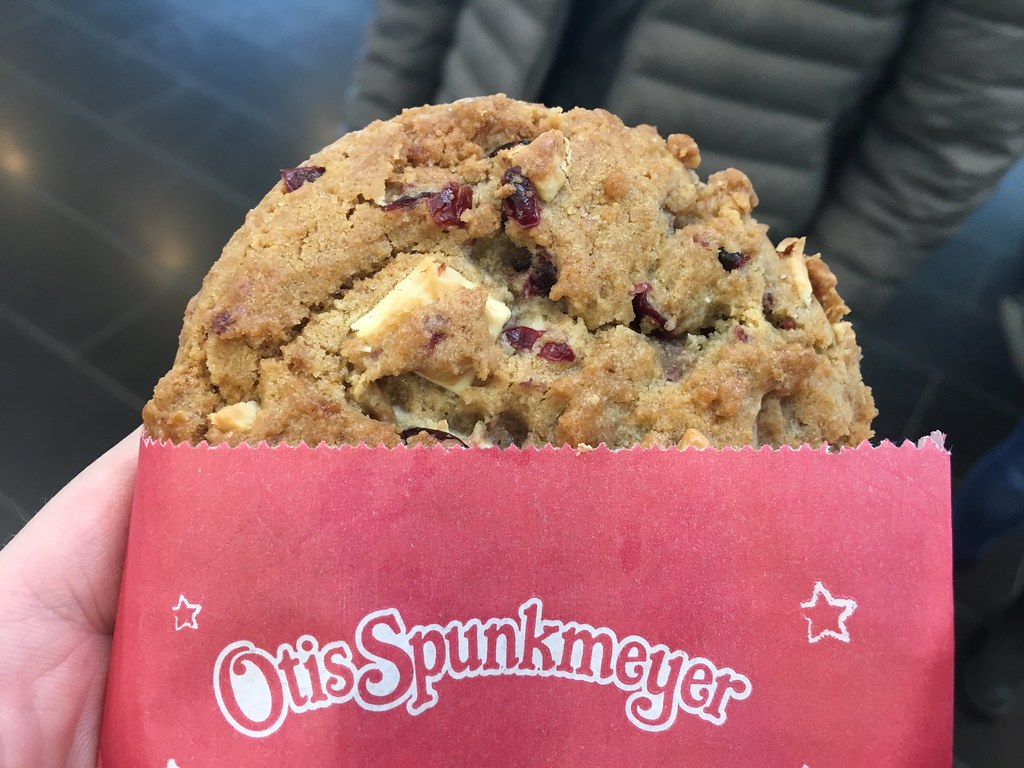
Otis Spunkmeyer

Ken Rawlings opens the first fresh-baked cookie store in Oakland, Calif. The name, Otis Spunkmeyer, Inc., was chosen by his 12-year-old daughter.

“Otis Spunkmeyer Cranberry cookie” by Like_the_Grand_Canyon is licensed under CC BY-NC 2.0.

8/13/1977

Criminal Cookie

Lawrence E. Wallick appears in an Ocean Beach, Fla. court on charges of eating a chocolate chip cookie in public. He ran afoul of an ordinance designed to prevent litter in the community.

1978

Adding Ice Cream

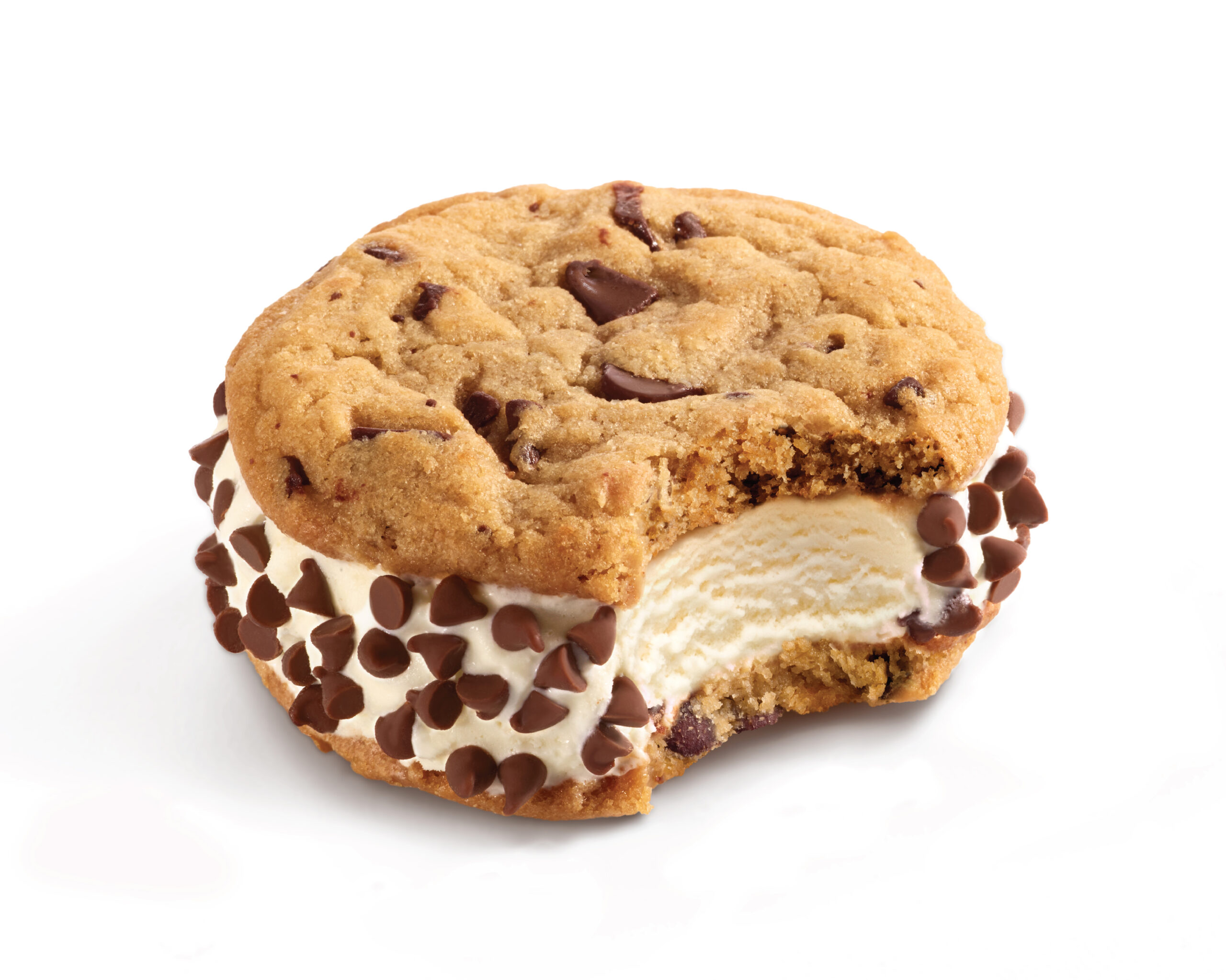
The Chipwich, two chocolate chip cookies with ice cream sandwiched between them and then rolled in chocolate chips, was created by  Richard LaMotta and Sam Metzger. LaMotta trained sixty street cart vendors (mostly students) to sell the new product on the streets of New York, for a dollar each; this rapidly established Chipwich as a successful brand. Some twenty-five thousand Chipwiches were sold the first day.

“Chipwich ice cream sandwich” by Crave Better Foods, LLC, copyright owner of The Original Chipwich is licensed under CC BY-SA 4.0.

1980

More Dough

Proctor and Gamble register the first U.S. Patent for shelf-stable cookie dough.

1984

Added to Ice Cream

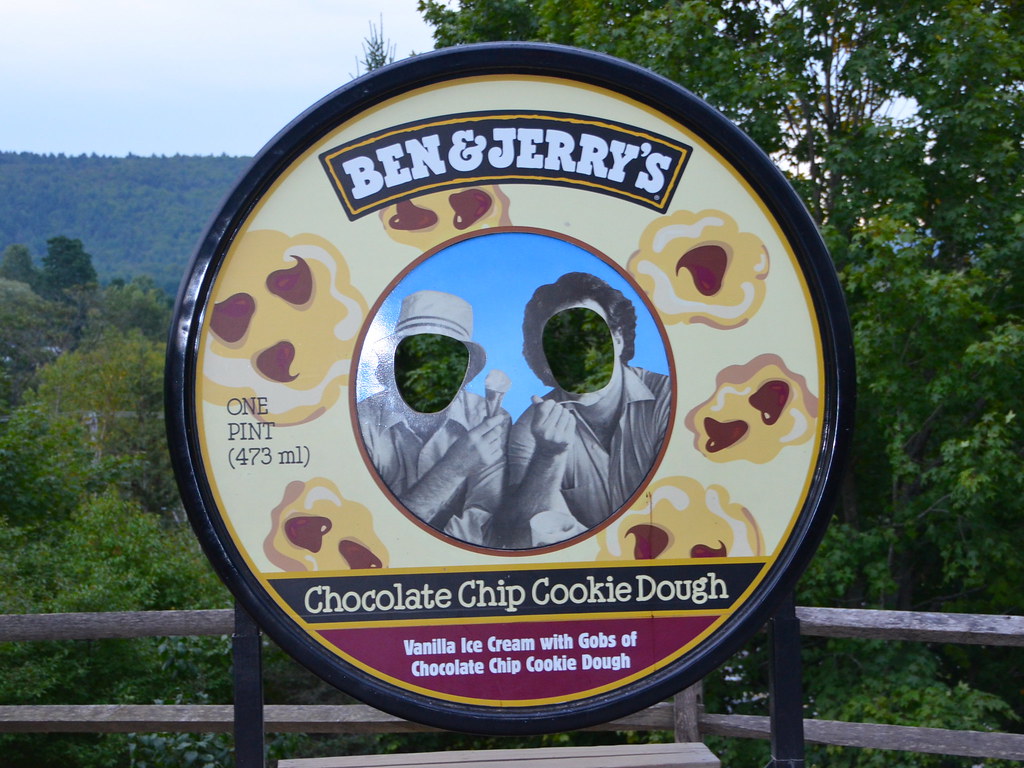
Ben & Jerry’s debuts Chocolate Chip Cookie Dough ice cream at their store in Burlington, Vermont, after an anonymous suggestion from a customer. By 1991, it becomes their best-selling flavor.

“You can be Ben & Jerry” by afagen is licensed under CC BY-NC-SA 2.0.

1992

Presidential Cookies

After getting pushback from her comment that she “didn’t want to stay home and bake cookies” when her husband was elected Governor of Arkansas, Hillary Clinton participated in a “bake-off” with First Lady Barbara Bush, sponsored by Family Circle magazine. Clinton’s recipe was shared in a New York Times article. (spoiler alert: Clinton’s cookies won, and then in 1996 beat Elizabeth Dole’s recipe) The Presidential Cookie Contest became a regular thing until 2020.

1995

Doubletree Cookies

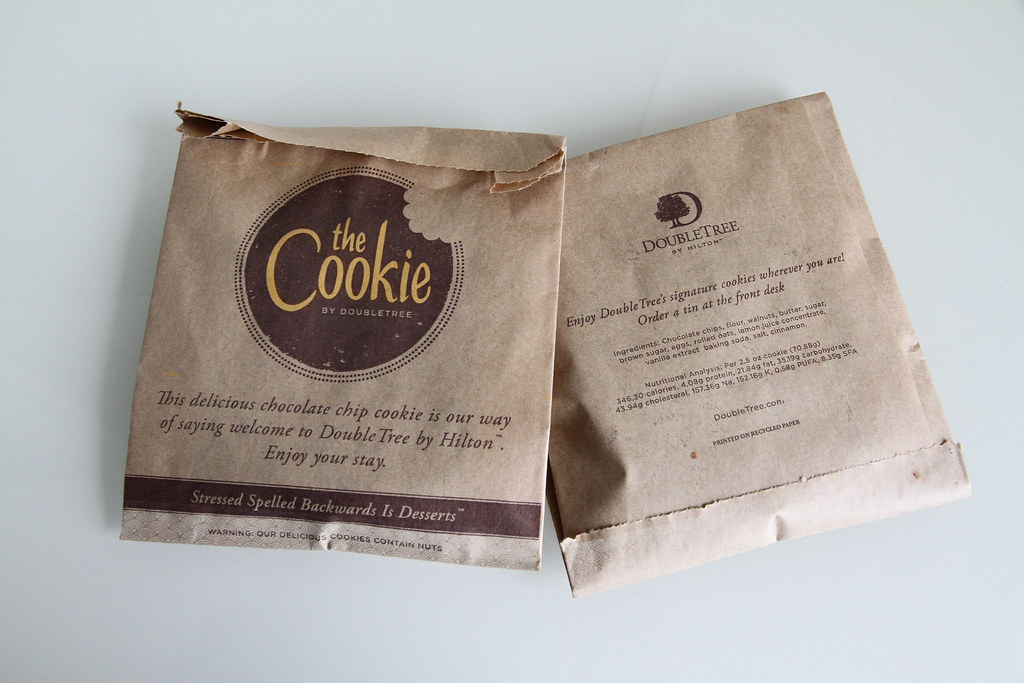
Doubletree Hotels begin giving out cookies to guests at check-in. Several boutique hotels also decide to hand out cookies.

“manchester_04” by clara-maya is licensed under CC BY-NC-ND 2.0.

7/9/1997

State Cookie

The chocolate chip cookie becomes the Official State Cookie of Massachusetts. The designation was proposed by a third-grade class in Somerset, Mass.

6/21/2017

Sharing the Recipe

Sue Brides’ daughter, Peg, shared the original recipe with Maria Stephanos of WCVB of Boston.

Socioeconomics of the Cookie

Data Intelo’s Chocolate Chip Cookie Market Research shows “The global chocolate chip cookies market is projected to grow from USD 12 billion in 2018 to USD 18.7 billion by 2030.” Unsurprisingly, they also say that, with a share of nearly 41%, the North American region is the largest market. Boost Agency reports that one in five Americans eat more than three cookies per day on average, while 95% of Americans eat a cookie every month.

Companies are also trying to increase the reach (and their profits) by providing ingredients for people with different dietary concerns. Nestlé recently announced that they are going to be introducing plant-based chocolate chips to make it easier for vegans to enjoy chocolate chip cookies. And they are not the only company to make vegan chocolate chips. There are dairy-free chips, sugar-free chocolate chips, egg substitutes, butter substitutes, alternate (non-wheat) flours and pretty much everything else you can imagine to adapt a recipe for a certain diet. Whether they taste good may be a different question.

Though chocolate chip cookies have always been considered an accessible treat, the cost of the ingredients to make cookies has gone up. Data from the Labor Department shows that the cost of eggs and margarine jumped up 50% from November 2021 through the end of 2022. Flour and baking mixes went up 25% in that same time period.

According to the U.S. Bureau of Labor Statistics, the cost of chocolate chip cookies has gone up. Their data measures chocolate chip cookies regardless of packaging size or type, and includes those with raisins, nuts, icing, or other similar features, as well as organic and non-organic cookies.

With the increased cost of ingredients, making cookies is more expensive. Calculator Academy has created a Cookie Cost Calculator to break down how much each cookie you make costs, while Be the Budget gives advice on how much to charge per cookie if you decide to sell them.

But the cookie business is hard work. Wally Amos, founder of the Famous Amos cookie company, lost control of his own business, and in the process lost the right to use his own name. He founded the company in 1975 and sold $300,000 in cookies that year. The company reached $12 million in revenue by 1982. He was given one of the first Awards of Entrepreneurial Excellence by President Ronald Reagan in 1986.

But Amos was a high school dropout who didn’t know much about running a business and didn’t hire anyone who did. Investors stepped in to help, but Amos said each time they took more of his equity stake but never stuck around long enough to actually fix the issues. The company lost $2.5 million in 1988 and then was bought for $3 million by the Shansby Group,

The Shansby Group managed to turn the business around, pushing vending machine sales and cutting costs. Then they sold the company to President Baking in 1992 for $61 million, and then Keebler acquired the business in 1998.

In 1992, Amos tried selling cookies again using the name Wally Amos Presents, but Famous Amos sued, so he changed his brand to Uncle Noname. The cookie business is competitive, and Amos couldn’t keep up. In 1997, Uncle Noname filed for Chapter 11 bankruptcy protection.

In March 1999, Keebler hired Amos to once again be spokesman of the brand he began, though he required that the recipe be adjusted to be more similar to what he had made rather than the changes the successive owners had made. Keebler obliged.

Amos has also started a line of fat-free and low-fat muffins, using the name Uncle Wally. The contract with Keebler allows him to use his own name again. And this time, he has someone who knows what they are doing in charge.

Quest for the Perfect Cookie

The chocolate chip cookie has pretty standard ingredients: flour, butter, sugar, egg, vanilla, baking soda, salt and chocolate chips. Tastewise reports that there are 18,359 chocolate chip cookie recipes online. But if you do an online search for chocolate chip cookie recipes, Google will deliver about 91,400,000 results. 
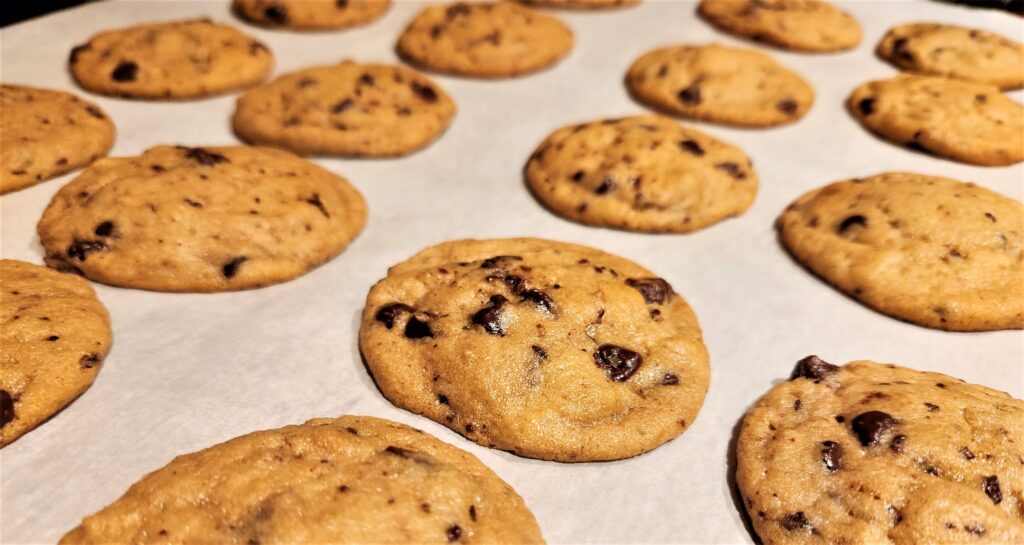
There are a lot of variables that go into baking. So what makes the perfect chocolate chip cookie? According to Jess Smith of Inquiring Chef, “You like what you remember it tasting like. You remember your mom or your grandma or your loved one making it.”

If the chocolate chip cookie is a pretty standard recipe, why are there so many variations? This is because we aren’t content to just have the classic recipe, or a “good enough” recipe. We want the perfect recipe, and everyone wants to put their own spin on it. Sometimes that means varying the techniques. Sometimes it means varying ingredients.

As Dorothy of Crazy for Crust wrote on her chocolate chip cookie recipe page, “Chocolate Chip Cookies: when you find a good one, it’s the unicorn of dessert recipes.”

Sometimes the recipe is just a small tweak of the ingredient amounts. Maybe someone wants a crispier cookie, so they use more granulated sugar and less brown sugar. They might use margarine or shortening instead of butter. They want a less-sweet cookie, so they use less sugar. 

Other times, people want something a little different. They’ll chop up some dark chocolate rather than use chips. In an interview with Buzzfeed, pastry sous chef at Eataly in New York City Kyle Bartone gave tips for making bakery-quality cookies. One of his tips includes using chopped chocolate because he says that chocolate chips frequently have ingredients designed to help them keep their shape, so they don’t melt well. Pastor Bill Radatz told me that he had heard that using chocolate chunks was better, because it gives you more chocolate. Is it truly a chocolate chip cookie if it doesn’t use chocolate chips? It is truer to the original.

Some people want the cookie to be its own entity. Some people just use the cookie as a vehicle for chocolate. Lifehacker offers tips to make your cookies even better, which basically amount to adding mini chocolate chips to your regular chocolate chips to get even more chocolate in every bite. Jess told me that there was actually someone who complained that her recipe had too many chocolate chips. Neither of us thought that was ever possible. After all, there’s a baker’s saying that tells you not to let a recipe dictate how many chocolate chips to put in your cookies—measure them with your heart. In other words, put as much chocolate in as you want!
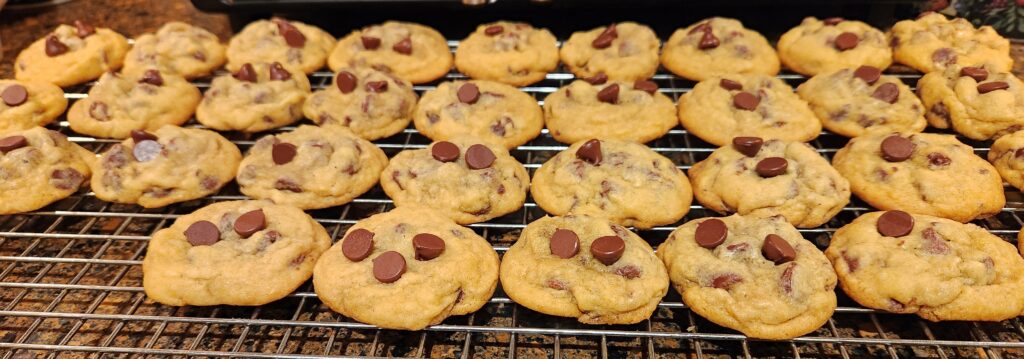
And there are different techniques. One well-known method now is the pan-banging method. I confess, the very thought makes me nervous. I am very accident-prone, so I have visions of the cookies going flying whenever I adjust the pan. Another method uses two spoons to smoosh the cookies together right after they come out of the oven.

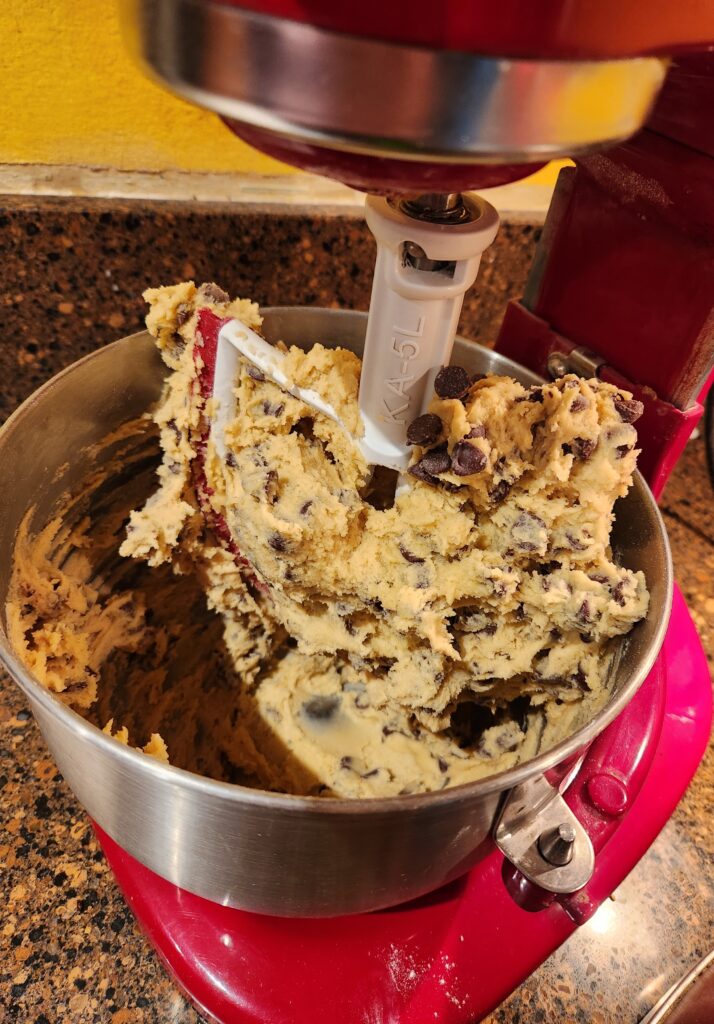
Some recipes call for the cookies to be baked immediately after making the dough. Others suggest chilling the dough (also known as letting it age) anywhere from one hour to three days before baking, if you can wait that long without eating all the raw dough.
And then there’s the Famous Amos technique. When Family Circle published his raisin-filled chocolate chip cookie recipe, there was a note from him at the bottom: “Encourage your cookies as they bake… talk to them and watch them closely.”

Over the years, I have made a lot of cookies. I didn’t make them all from scratch—those premade doughs that Nestlé and Pillsbury sell are far too convenient to resist. After all, who wants to wash the bowls? 

Like many other people, as a child I remember helping my mother who frequently baked cookies. She had one hard and fast rule about baking cookies: “Whatever you do, don’t make cookies like my mom’s.” My grandmother was a wonderful woman, but she didn’t have the knack for making cookies and frequently burned them. (Mom said that they were still good, though, if you soaked them in milk.)

My strongest memories come from my fifth-grade science fair project. The West Point School hosted a science fair every year. It was very competitive, since at least half of the students were the children of officers teaching at the United States Military Academy. Students from grades 5-8 could enter, and then there would be one day when a couple of science professors from the Academy would come review all the projects and judge them. That evening would be an awards ceremony, followed by a chance to view the projects.

When Mrs. Shimek assigned the project, I came up with the idea of researching what fat makes the best chocolate chip cookies. I researched unsaturated fat, saturated fat, polyunsaturated fat and whatever else I could find. I weighed and measured the cookies. I did a taste test, baking up cookies made with four different fats—butter, margarine, oil and shortening. Then I took them to school and did a taste test. At the time, the cookies made with margarine won.

Confession time: first I made all of the cookies for the taste test, but then it snowed. A lot. As in, school was cancelled for several days. We were trapped in the house with something like eight dozen cookies. Of course, we couldn’t let them go to waste! Though my father insists that they did go to waste… or rather, they went to waist, because we ate all of the cookies and then made new ones for the rescheduled taste test.

And at the end of my project, I created a board to display all the work I had done and proudly showed it off to the judges, only to be informed that it wasn’t science. 

I didn’t win any awards at the ceremony, which was disappointing, but mine was the most popular display at the fair. Probably because I handed out cookies, but I’d like to think it was because of how interesting my project was. After all, chocolate chip cookies are something that people can relate to. Who cares about the effect of gamma rays on marigolds?

And Mrs. Shimek loved the project so much, she asked to keep my display board so that she could show it to future classes as an example of what to do. So while the judges may not have appreciated me, I think I won the popular vote and got teacher approval as well.

Emotions of the Cookie

Cookies—and especially chocolate chip cookies—are a favorite childhood memory for many people. They are as much a sentimental favorite as a gustatory treat. Many people have memories of chocolate chip cookies. People made them with their mother. Their grandmother always had them on hand whenever they visited.

Jess of Inquiring Chef said that she remembers baking chocolate chip cookies as a kid, and now her husband requests them every year for his birthday. She doesn’t think that he has memories of his mom baking cookies, but his vision of the perfect cookie is the one that she set as her perfect cookie.

When I asked my survey participants about their best chocolate chip cookie recipes, Kevin and Calvin shared stories of bonding over baking cookies with their sisters and former roommate, respectively.

Lamont said that his mother would sometimes get the premade cookie dough and let him help bake the cookies, then let him watch VHS tapes while eating the cookies. Paul talked about having cookies with hot cocoa when it was cold out—and growing up in Minnesota, he knew cold weather.

Troy shared that his mother, who just died a year ago, used to make cookies for him, so he thinks of her when eating them. Patricia said that her mother usually made oatmeal cookies rather than chocolate chip, but now she makes them herself and invites her boyfriend to share them.

Several people shared that their happy memories involve warm, gooey cookies right out of the oven. Brenda enjoys them best hot out of the oven with some cold milk. Elaine shared her love of eating the dough as she made cookies. Kim said that her mother used to make cookies—not very well—but the smell of them would just permeate the house.
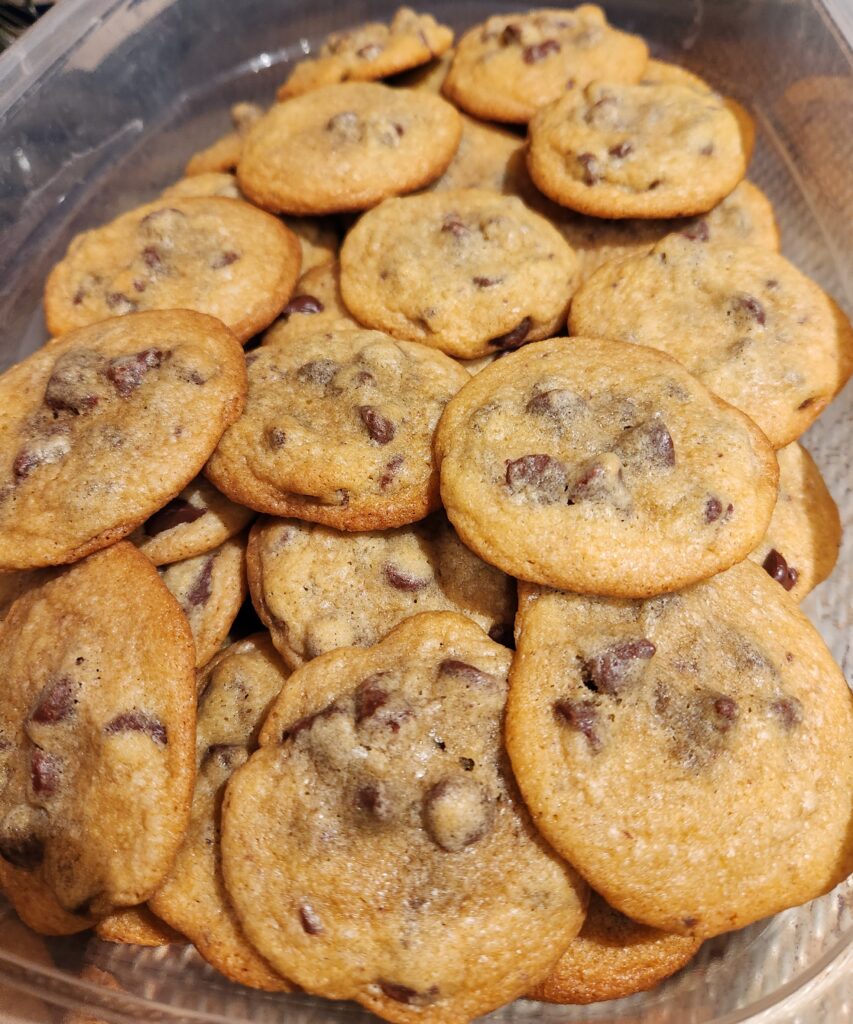
Juan said that his mother made—and still makes—cookies all the time. Unfortunately he is pre-diabetic and has to avoid sugar, so he can’t have any of the cookies that she makes. He has been making sugar-free brownies for himself, but it isn’t the same.

Kathy, a Type-1 diabetic, can’t have cookies either, so even though she enjoys baking, she doesn’t do it much anymore. Rather than try alternate ingredients, like sugar-free chocolate chips, she just doesn’t bake except with her grandkids. “It’s easier, so you’re not tempted!” When asked what she misses most about not having cookies (besides eating them, of course), she said it’s the smell in the house: “You walk in the house, and you know there’s cookies baking.”

Mary claims that her mother, who she insists was the best cook ever, always made the recipe on the bag of Nestlé chocolate chips. Mary also uses only that recipe, and shared plans to bake them with her granddaughter the following day to take to an old friend. Mary’s daughter also uses the recipe on the bag, but she is vegan, so she adapts the ingredients.

Sometimes it’s a single fond memory that is brought back by cookies. Pastor Bekki Lohrmann said that her strongest memory of chocolate chip cookies was when, just after her son was born, her neighbors brought over fresh, gooey chocolate chip cookies. She held her baby with one arm while using the other to munch on the treat. That baby is now four years old and helps bake cookies: “he’s really good too!”

Pastor Bekki is currently pregnant with her second child and due very soon. She told me that she’s not supposed to have any sugar or carbs until the baby comes, but if I have any cookies after she gives birth, she’d be happy to take them off my hands. (Since this was written, she has had her baby. I have not brought her any cookies yet, but I will be baking this weekend!)

Marjorie loved chocolate chip cookies so much that she chose to have them rather than cake at her wedding reception.

And cookies have other side effects. In 1996, Roy Baumeister conducted an experiment that The Atlantic describes as “downright evil.” The experiment that he and colleagues Ellen Bratslavsky, Mark Muraven and Dianne Tice ran was designed to test willpower. The 67 participants in the study were kept in a room smelling of freshly baked chocolate chip cookies. Some participants were even allowed to eat the cookies. But those in the experimental group—the ones whose willpower was being tested—were only allowed to eat radishes. Naturally they were not happy about it, apparently sending longing glances to the cookies.

The team then gave participants a puzzle designed to test persistence, supposedly unrelated to the cookies. The group that got to eat the cookies devoted more than twice as much time to the puzzle and made many more attempts. The radish-eaters had apparently expended too much willpower resisting the cookies and could no longer engage in such a draining task.

The results of the study have led to the belief that self-regulation is like a muscle, which needs rest after being exercised. Because the radish-eaters had used so much energy denying themselves the treats that they were tormented with, they didn’t have the ability to focus on the puzzle task. It sounds like eating cookies could be good for your mental health!
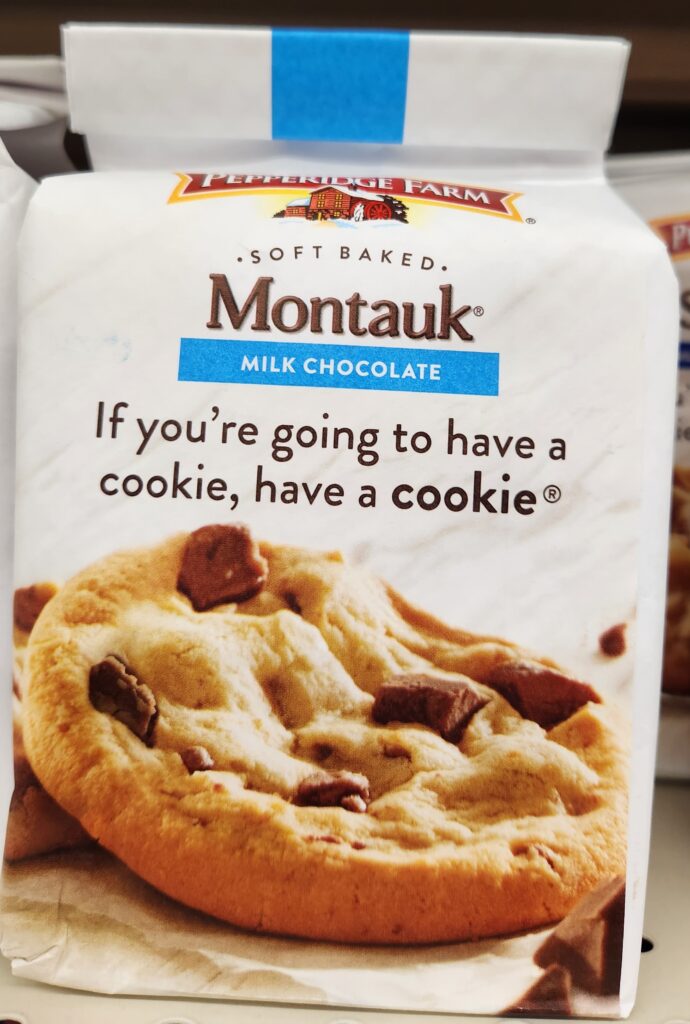
Pepperidge Farm cookie package with good advice.

Closing

I have made cookies with varieties of chocolate, with chips, chunks and chopped bars. Margarine won the taste test in my science fair experiment, but when I share that story with people, they are usually shocked (and occasionally horrified) by that fact because margarine is not nearly as common nowadays. And in the years since, I discovered Irish butter, which has a higher percent butterfat content. I’ve softened butter, melted butter and browned butter. I have used all-purpose flour, bread flour and cake flour. I have mixed in Cornflakes, marshmallows, potato chips, peanut butter, toffee bits and more. All have been good, but none have been the recipe that will stop my search.

It’s possible this is because there is no perfect recipe. A recipe may be perfect for one person but not another. And as Shelly Jaronsky of Cookies & Cups wrote on her Ritz Carlton Chocolate Chip Cookies recipe page, “once you find the best-best…you get bored.”
How do you like your cookies?

Categories
Uncategorized

Creating a Community of Hope through Song

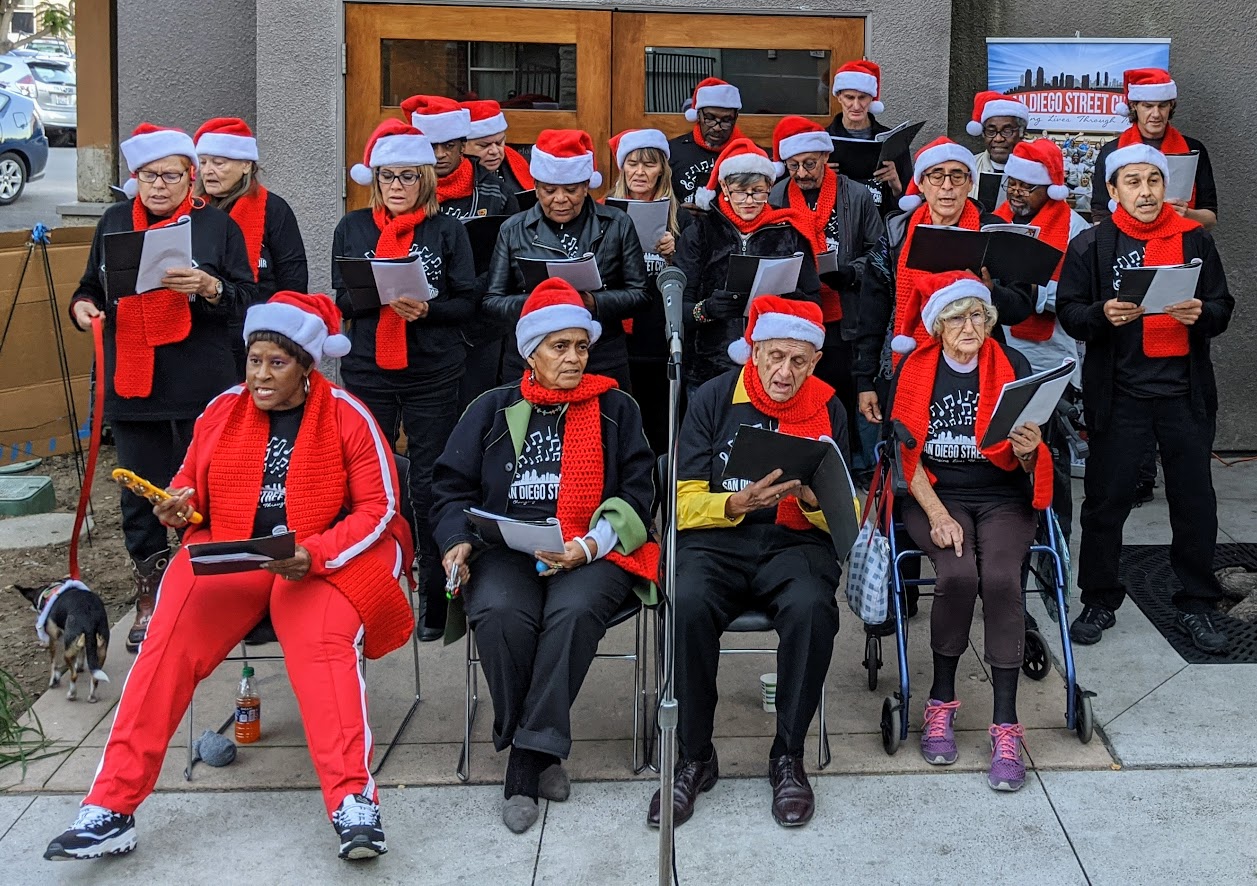
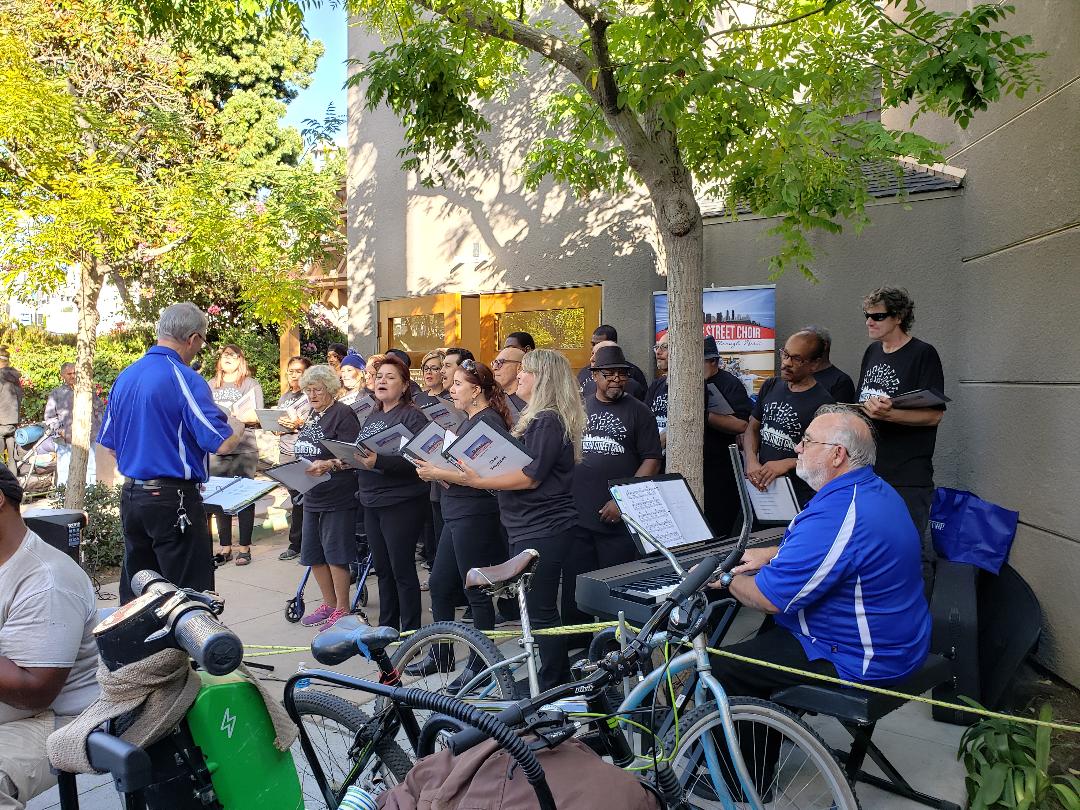
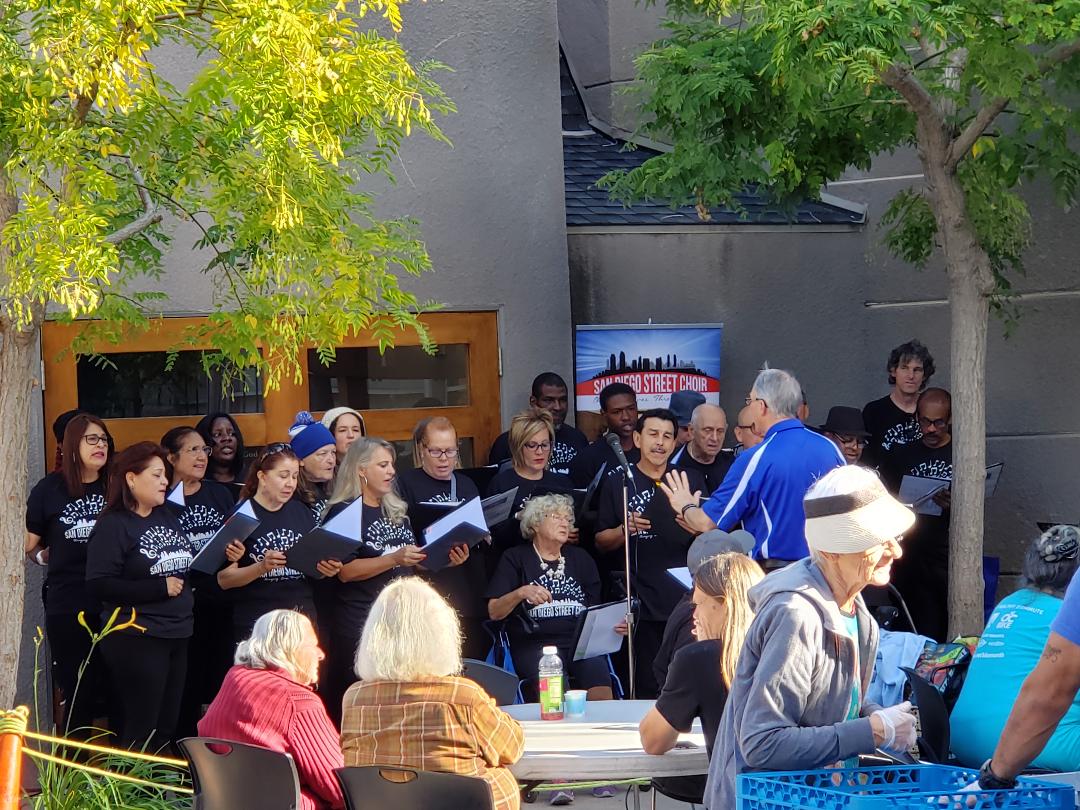
Life on the streets is difficult, even in San Diego. Many places won’t allow homeless people to stop on their property for a breather, let alone welcome them in. But the San Diego Street Choir invites everyone in, regardless of your housing status.

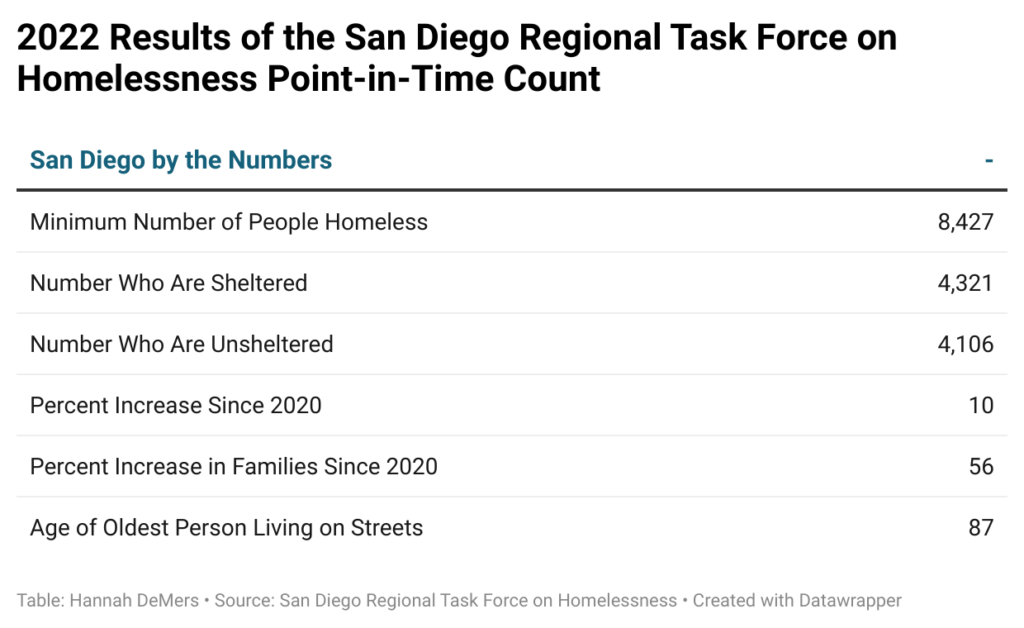
In May, the San Diego Regional Task Force on Homelessness released their annual Point-in-Time Count. The task force is charged with counting the number of homeless in San Diego, to the best of their ability, and then reporting the numbers that they find to the city.

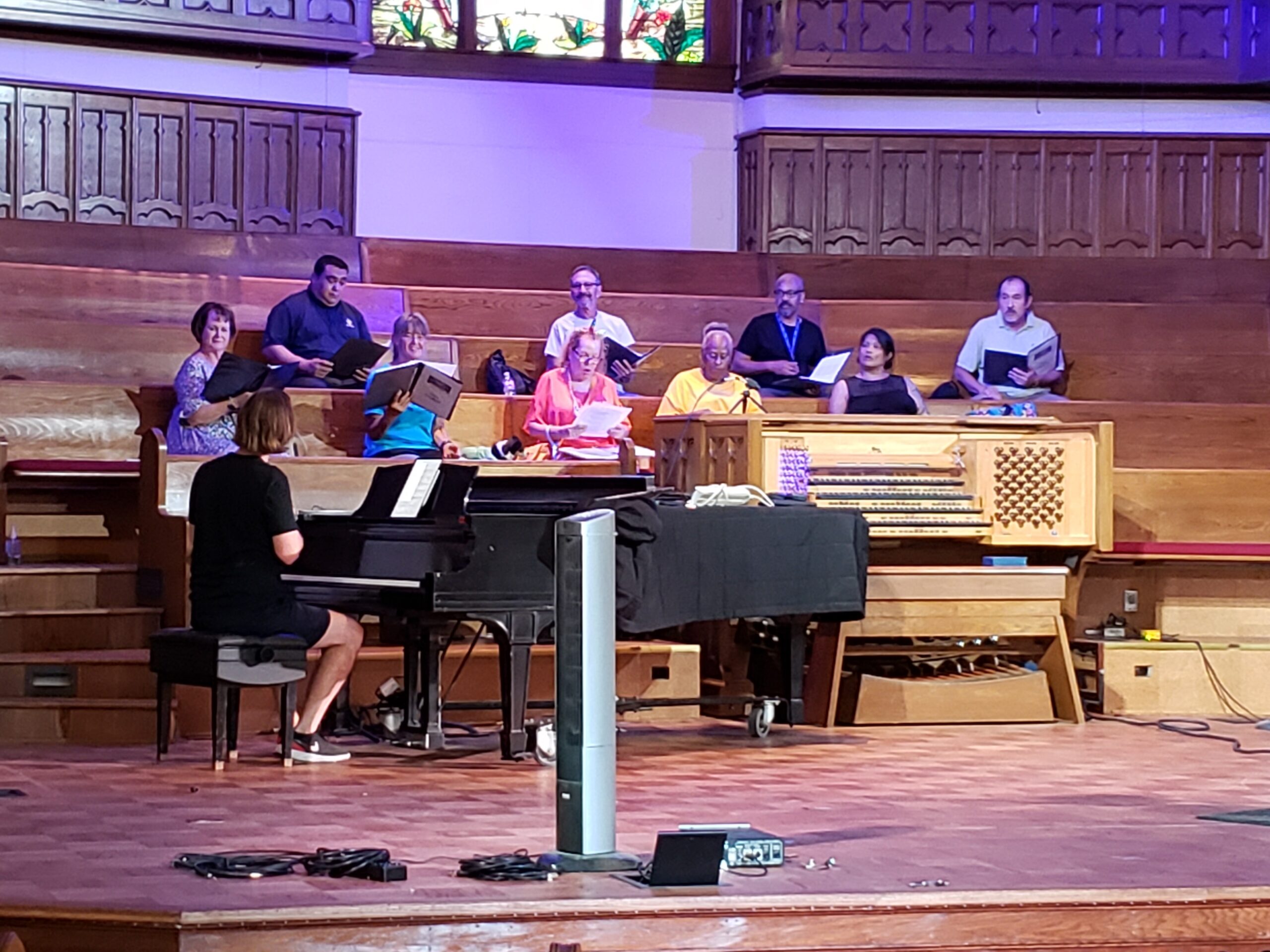
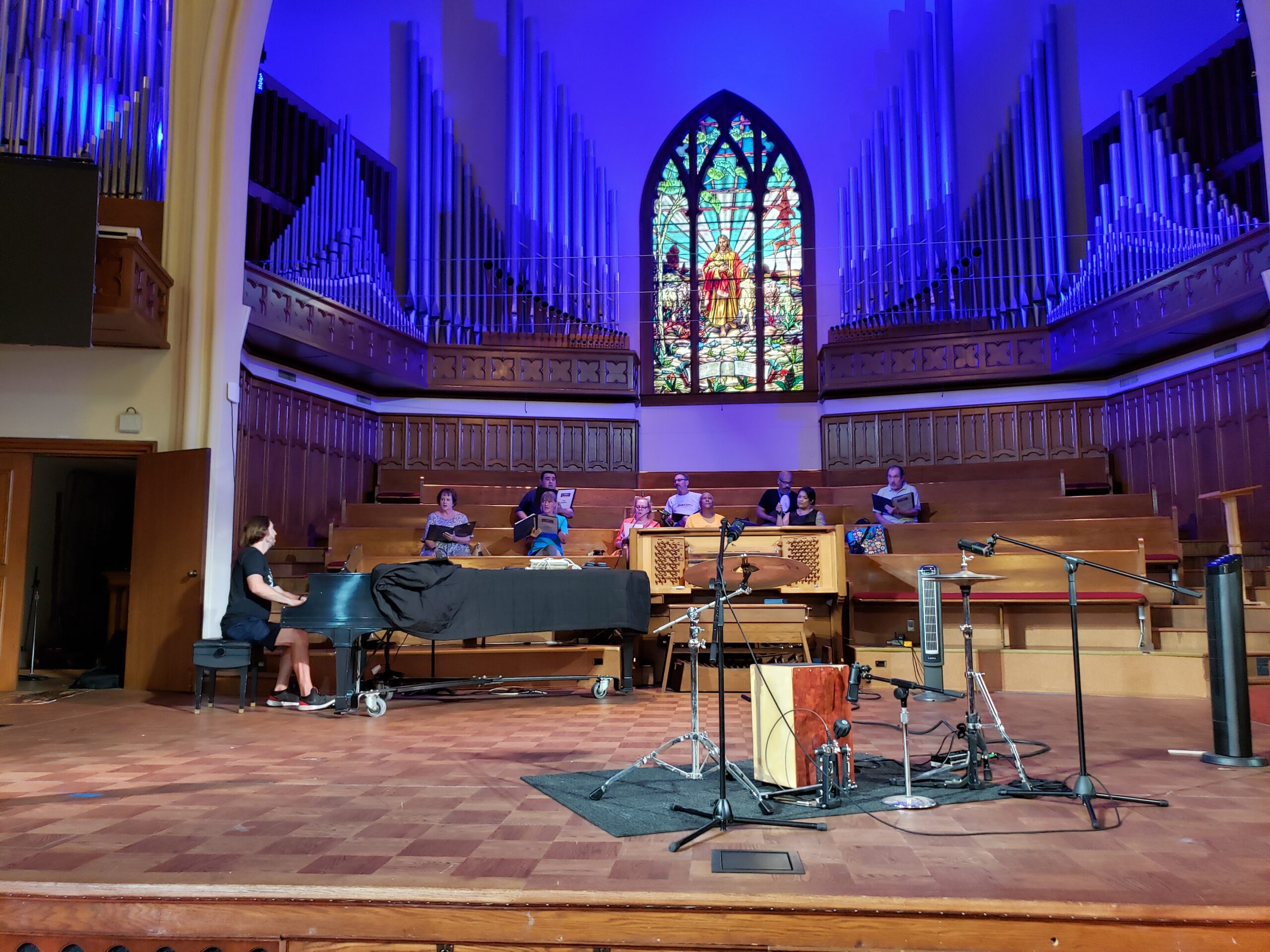
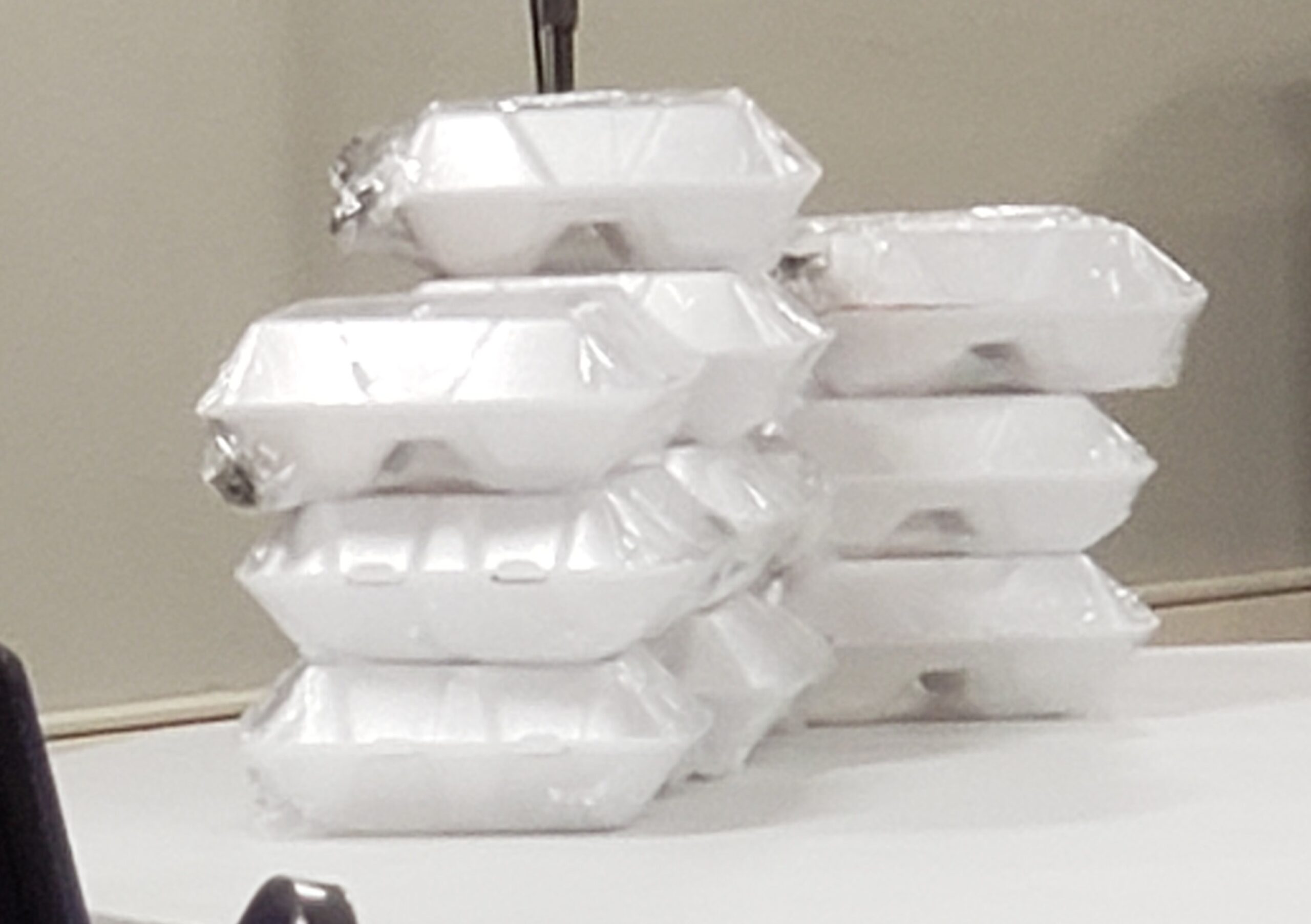
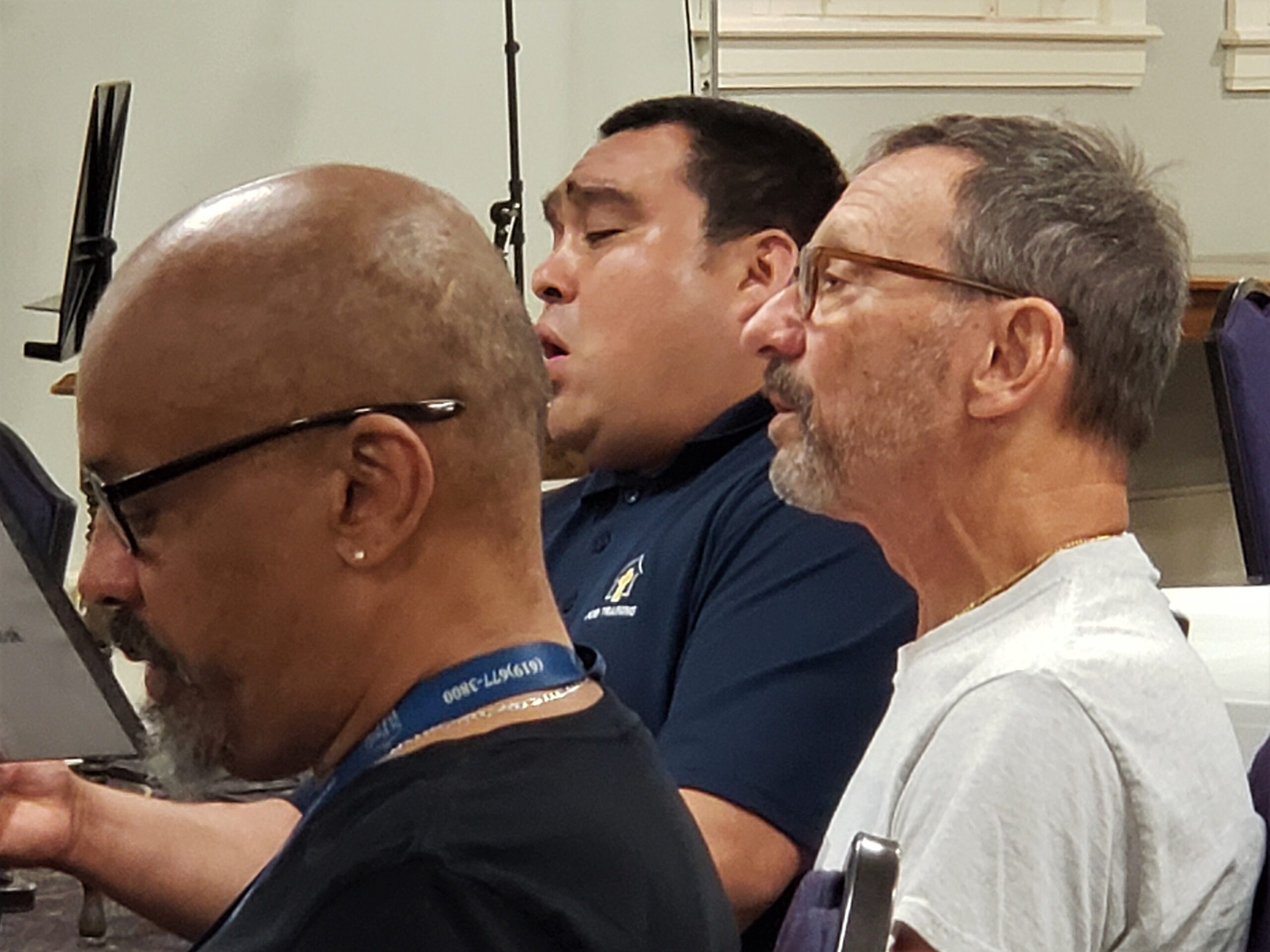
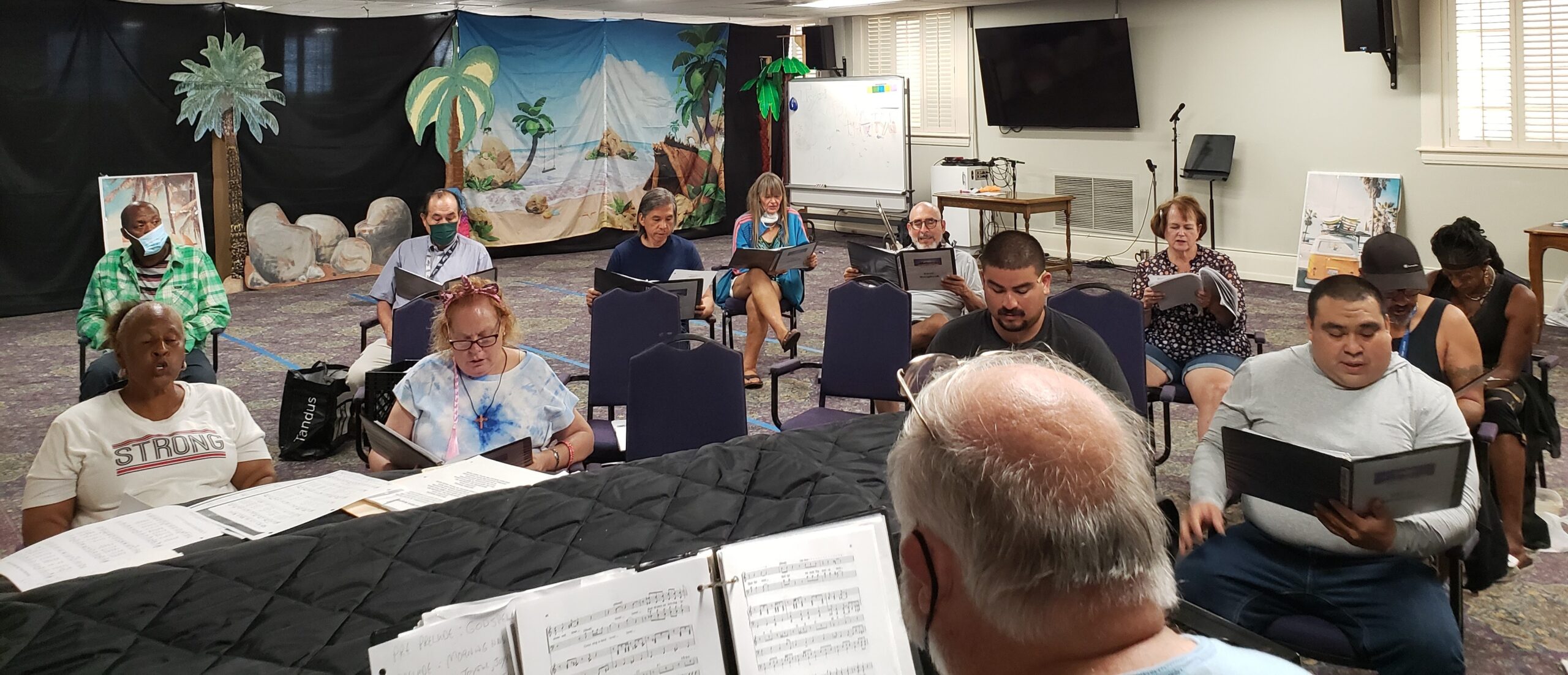
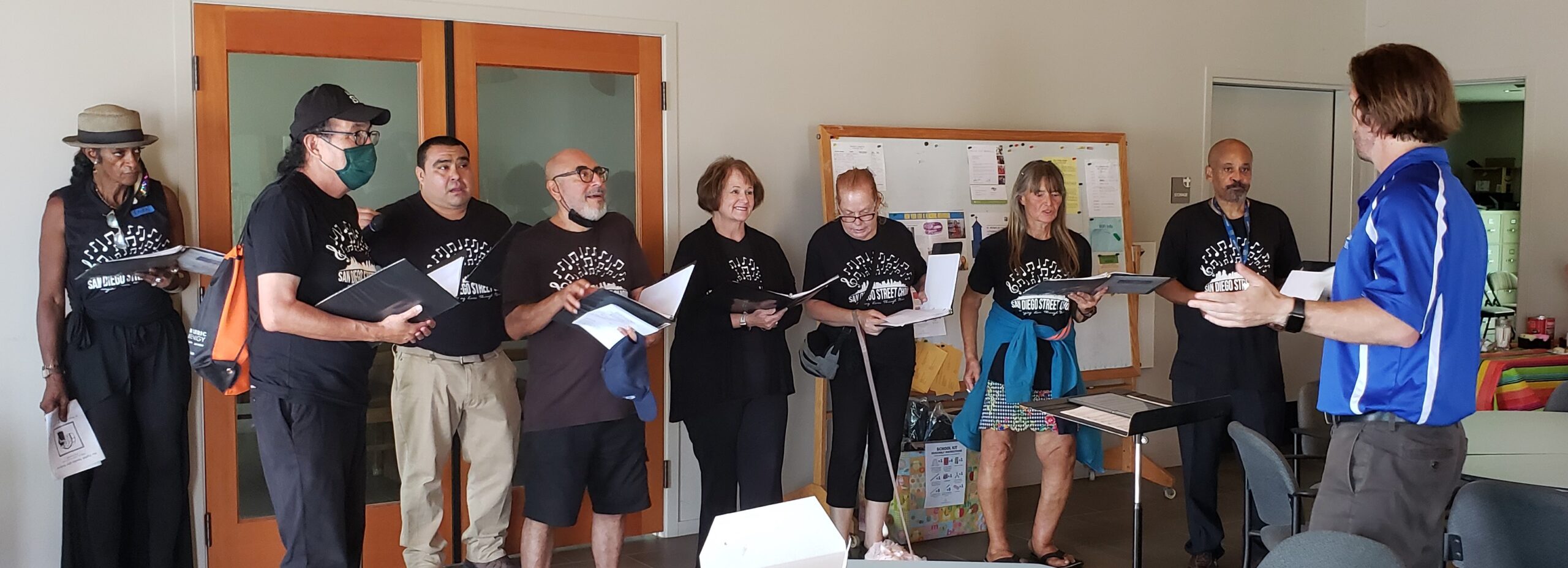
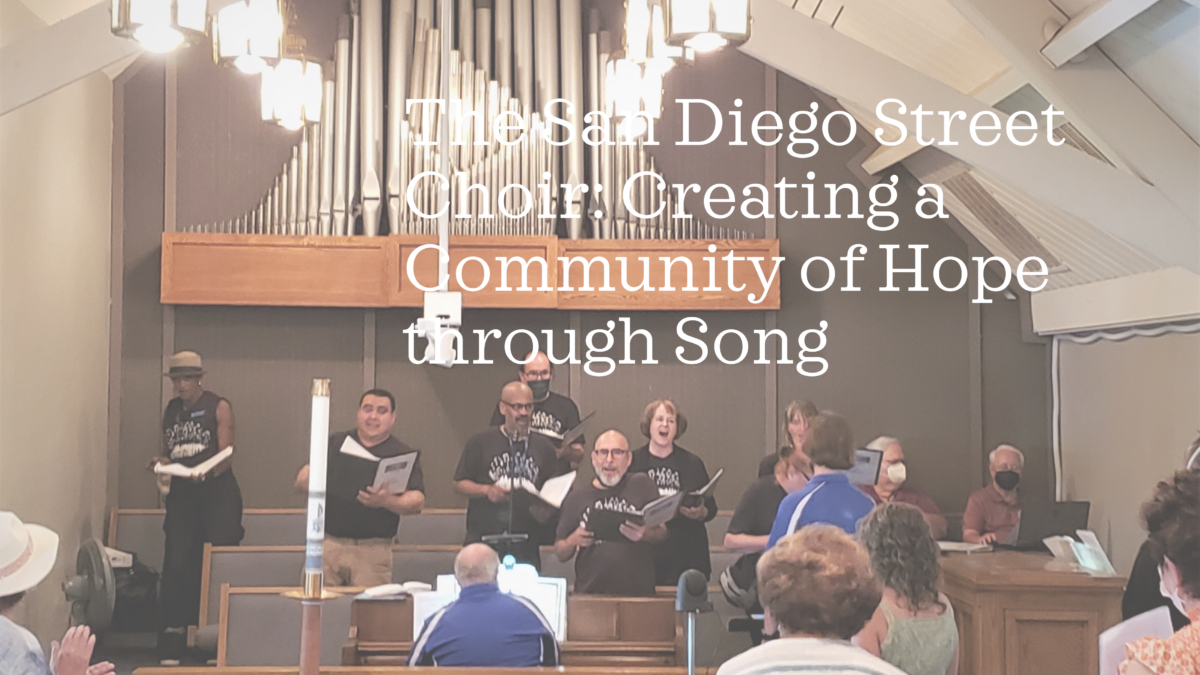
The Street Choir, begun on October 12, 2016, describes themselves as “a choir for those affected by homelessness.” Founding director Ron Bolles worked with First Presbyterian Church of San Diego and La Jolla Presbyterian Church to not only start the choir but create a support network. The choir meets on Wednesday evenings, when First Presbyterian’s Ladle Ministry serves their mid-week meal. Meals are packaged up to hand out to the members of the choir after rehearsal.

Bolles retired amidst the COVID-19 pandemic. The group took a hiatus for about a year but started back up in June 2021 under the direction of Rodney Girvin, who jumped on the opportunity, though admitted that Bolles had left very big shoes to fill.

“It’s such an important role, and these people are so important, and I wanted to make sure that whoever took the job over from Ron, it was the right person,” Girvin explains. “I truly feel I was called to lead this ministry.”

Girvin also said that he couldn’t do the job without Joe DeMers, who has been the Street Choir’s accompanist since the beginning. But they are striving to bring in members. Several members left the group during the pandemic. After resuming rehearsals, the group averaged about 15 members each week, but took another hit in the January surge. They now average about 12 members per week.

The choir does more than make music, they create community. The August 8 rehearsal started with an update on some of the missing members, then concluded with cake and ice cream to celebrate the July birthdays. Those who attend every rehearsal and performance receive a reward each month, providing incentive to attend.

They also receive support from outside the community. Todd Sutherland of Sutherland Management Corporation provides gift cards to the McDonald’s restaurants that he owns, which are handed out to members at rehearsal. Local churches donate money as well as performance opportunities to the group.

The group also supports the San Diego community. They perform regularly at the San Diego Rescue Mission and food distribution events, sharing the joy of music. They performed at a campaign event for the now-mayor of San Diego, Todd Gloria. Their annual BlesSING concert is a benefit to raise money for the Monarch Schools for homeless children.

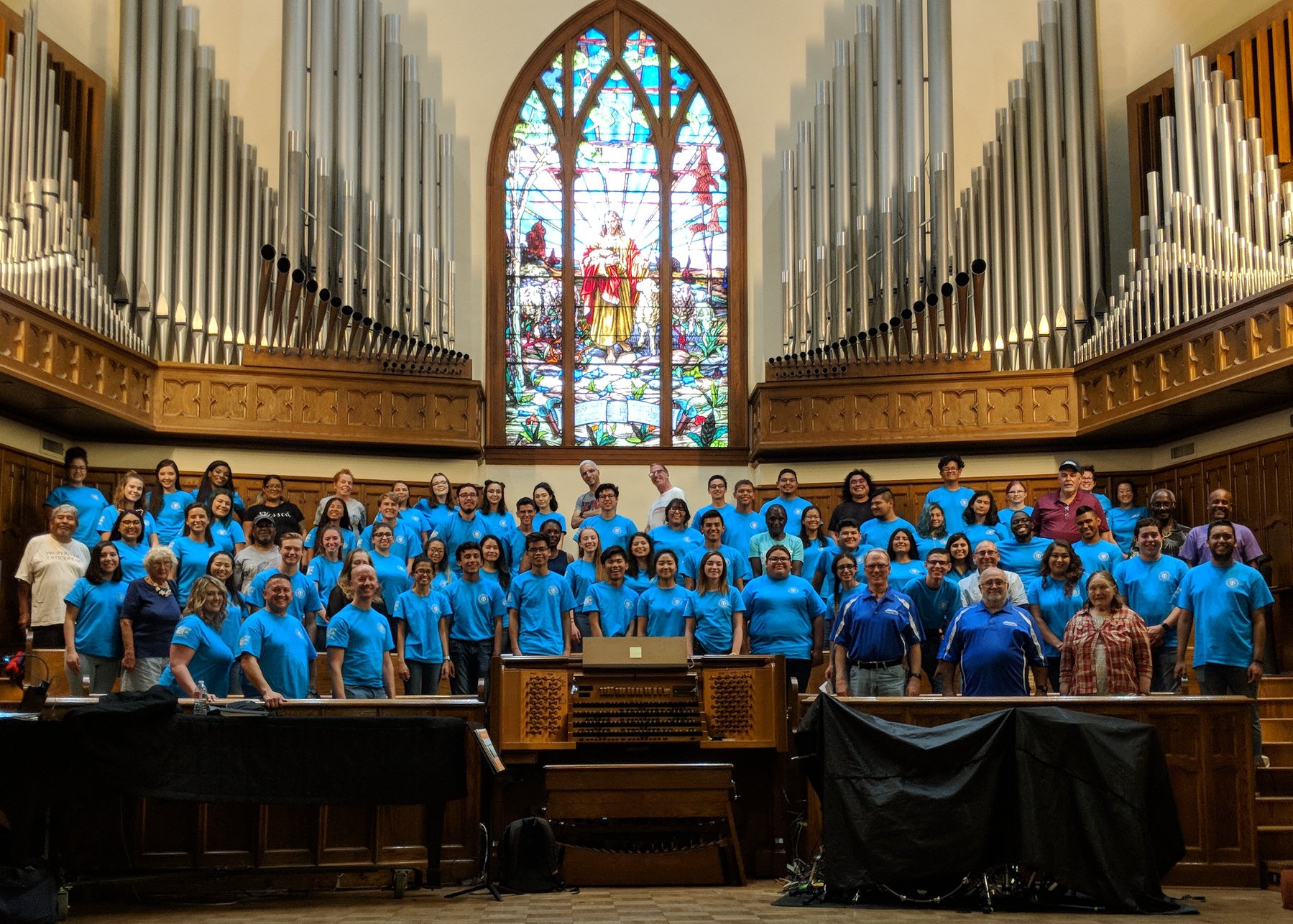
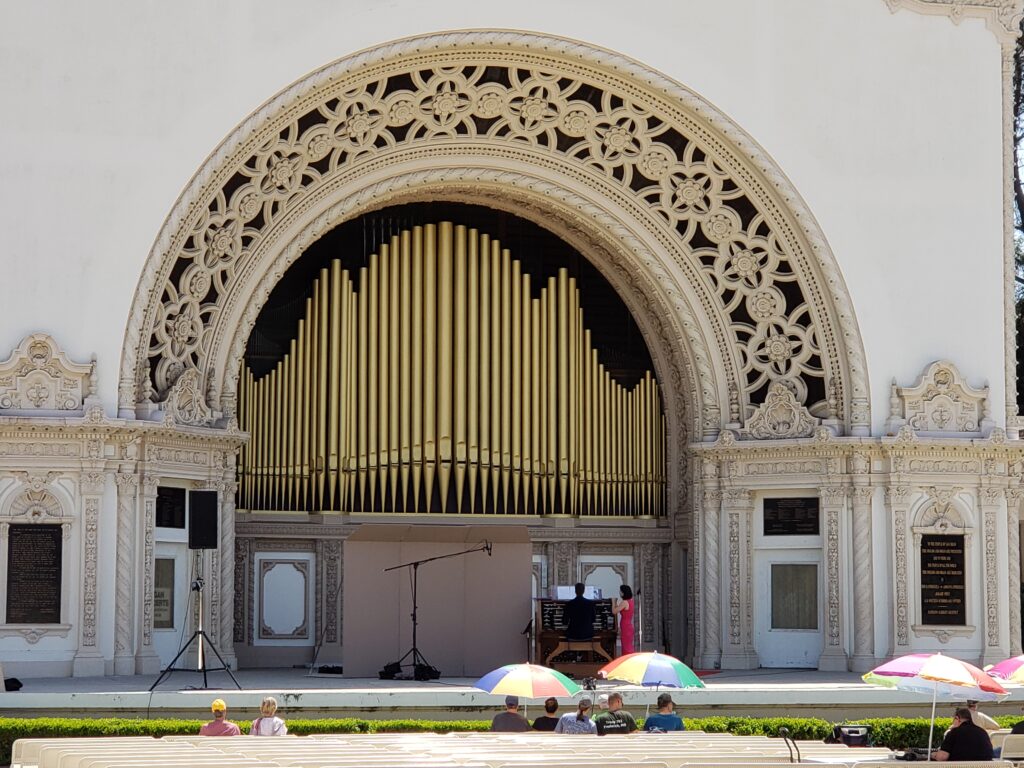
The group is a member of the Choral Consortium of San Diego, so the members got to perform at Copley Symphony Hall as part of the Big Sing event in 2018 and at the Spreckels Organ Pavilion in Balboa Park for 2019’s San Diego Sings! choral festival.

Girvin says that he tries to have the group perform every two weeks, because “they really get a kick out of it. It brings so much joy to them, giving this music to others, and that gives me great joy, seeing them have this joyful experience. I’m so moved by witnessing their experience.”

Categories
Uncategorized

Spreckels Organ Society Supports Ukraine

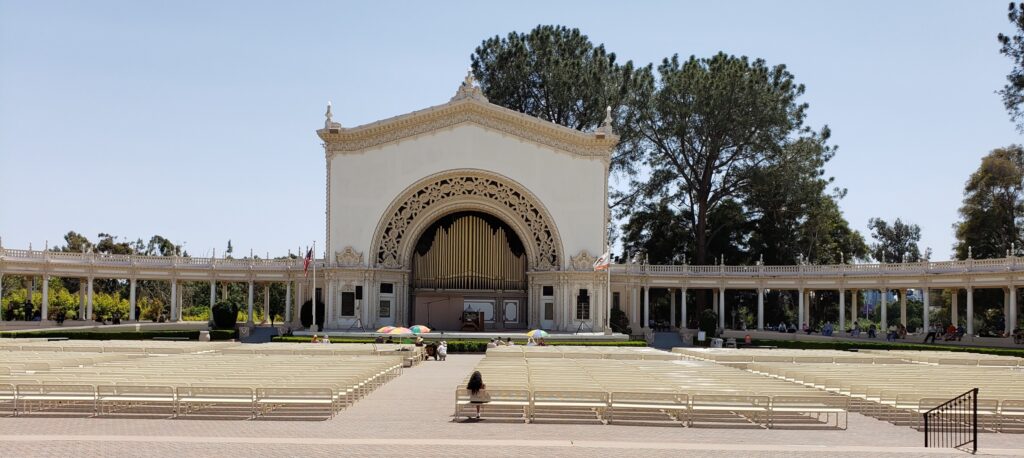
The Spreckels Organ Pavilion at Balboa Park, San Diego

Every Sunday afternoon, the Spreckels Organ Society of San Diego hosts a free concert at the Organ Pavilion located in Balboa Park. The Society has used the concerts as fundraisers for various charities in the past. Currently they are raising funds to support humanitarian relief for Ukraine.

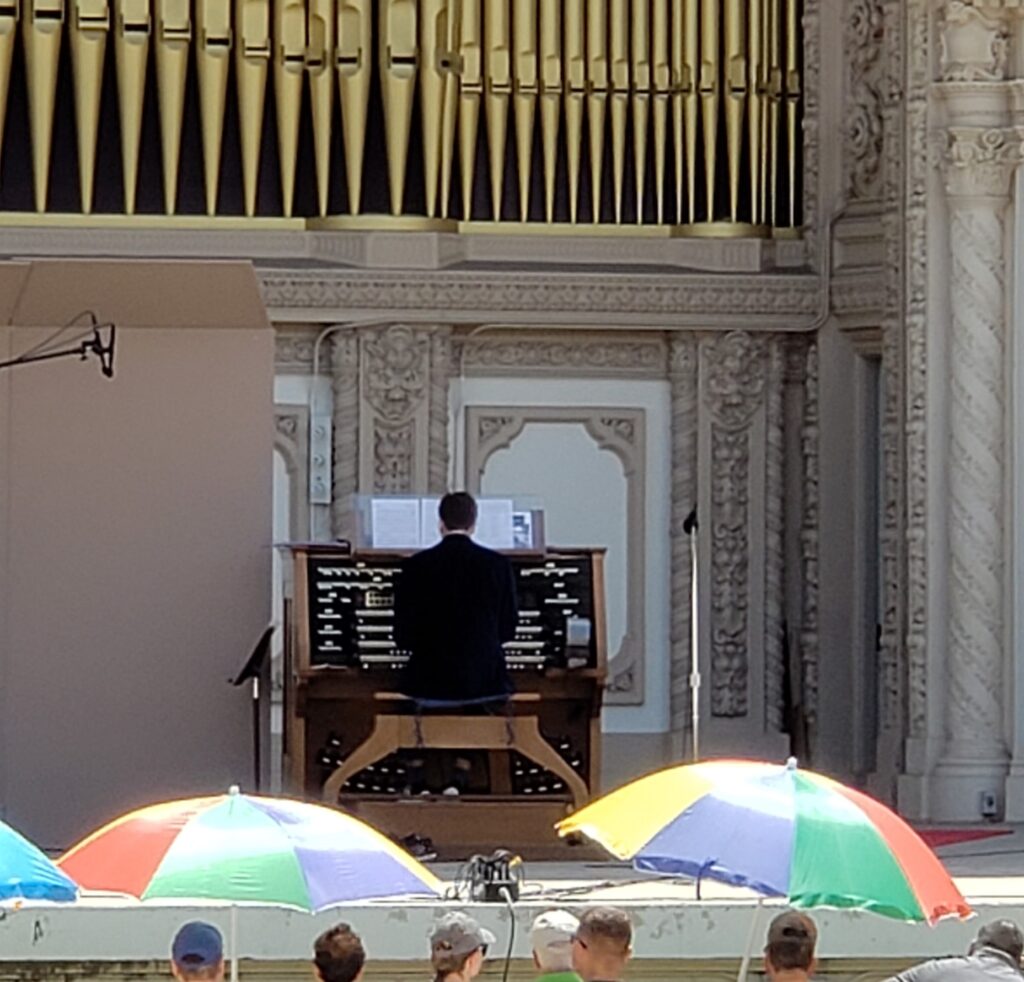
Beginning on Sunday, March 13, San Diego Civic Organist Raúl Prieto Ramírez has decided that he will begin each concert with the National Anthem of Ukraine until the crisis in Ukraine ends. He also dresses in the colors of the Ukrainian flag to show support.

“I think what I can offer, and because I worry and I care about my people here, San Diegans, and all my people here in this country, is to keep playing this national anthem to remind people of what is going on because news cycles may need to move to something else in the future, but this conflict seems it’s gonna go for quite a long time,” Prieto Ramírez said to KUSI News Photojournalist David Pradel.

San Diego Civic Organist Raúl Prieto Ramírez playing at the Spreckels Organ Pavilion

On March 19 the Spreckels Organ Society held “A Music Tribute to Peace, Dignity & Democracy,” a benefit concert for Ukrainian refugees which was supported by the San Diego Diplomacy Council. Approximately 1,400 people attended the event. Prieto Ramírez told CBS 8 San Diego, “We decided to focus on dignity, on peace and democracy.”

The benefit featured several guest artists, as well as Prieto Ramírez on the organ. There were several singers, including Ukrainian Soprano Anna Belaya and Soprano Laynee Dell Woodward, Mezzo-Soprano Sarah-Nicole Carter and Baritone Michael Sokol. After a brief intermission, the Organ Pavilion Rock Band performed classic rock songs from The Beatles, Pink Floyd, Led Zeppelin, Black Sabbath, and AC/DC.

All donations received at the benefit concert are given to Operation USA for humanitarian relief for Ukraine. The event organizers were hoping to raise $5,000. They raised more than $14,500, and they continue to accept donations. The Spreckels Organ Society has raised more than $15,800 as of April 13.

Several of the benefit attendees were wearing shirts they had gotten at the House of Ukraine, also located in Balboa Park, which featured the Ukrainian flag and the words, “I stand with Ukraine.” There were even a few Ukrainian flags being waved in the audience.

In his statement to announce the concert, Prieto Ramírez said, “This concert is a call for peace with no political affiliation. We see the current events as an opportunity to call for human dignity and peace. When JD Spreckels donated the organ to the City of San Diego, it was meant to be not just an entertainment tool, but a tool to feed every human soul with deeper and more delicate emotions to grow our human values.”

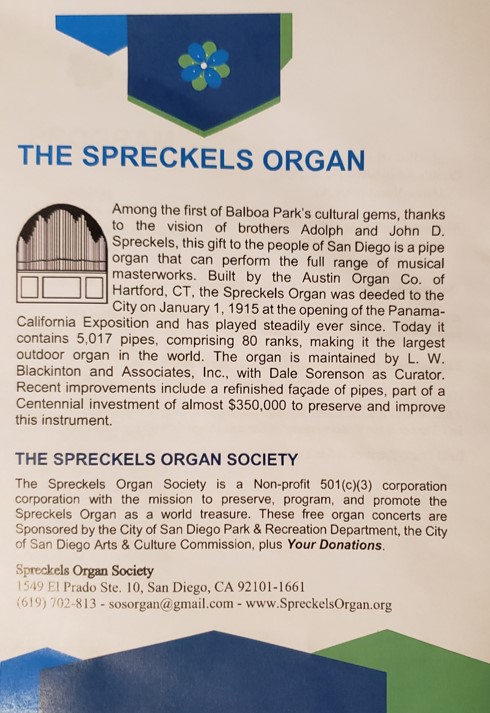
The back cover of the program for a concert at the Spreckels Organ Pavilion

According to the website created for the Spreckels Ukraine campaign, all donations to this campaign will be fully allocated to Ukrainian relief. “Operation USA is currently responding to the Ukrainian Refugee Crisis with emergency cash grants to community-based partners in Poland and nearby countries, and is working to coordinate the delivery of in-kind material aid in the months ahead.”

Their website also explains the first phase of Operation USA’s plan to allocate the money received: “OpUSA has committed 40% of total funds raised (approximately $295,000 as of March 25th) to the urgent response phase. These funds will be quickly disbursed to community-based partners directly supporting refugees at this time. Emergency grants will allow these partners to increase capacity, meet additional needs and provide necessary support to displaced Ukrainians.”

All over the world, countries are showing their support for Ukraine. One of the most common forms of support is through music. “I believe music is music. It really doesn’t matter. Any music just brings the best of human beings. It brings out emotions. It’s communication without words,” Prieto Ramírez said in his CBS 8 San Diego interview.

Concerts staged for philanthropic purposes have been around since 1749, when composer George Frideric Handel wrote his “Foundling Hospital Anthem,” and put on annual performances of “Messiah” to support a charity for orphans in London. Other composers and performers participated in concerts to raise funds for charitable causes, but it was also common to see musicians in the 18th and 19th centuries staging performances to raise funds for their own work. Ludwig van Beethoven’s 1808 “Akademie” concert is a prime example of this.

Nowadays, the commonly understood definition of a benefit concert is a large-scale event intended to support either a charitable or political cause. The first benefit of the modern era is believed to be the Concert for Bangladesh, two events held at Madison Square Garden in New York City in 1971 organized by George Harrison and Ravi Shankar. But the most common modern benefit concert format is modelled on Bob Geldof’s Live Aid event in 1985.

The national anthem of Ukraine’s official name is “Shche ne vmerla Ukrainy i slava, i volia,” which translates to “The glory and freedom of Ukraine has not yet perished.” The lyrics were written as a poem by Ukrainian poet Pavlo Chubynsky in 1862. Inspired by the poem, composer Mykhailo Verbytsky set it to music. The first choral performance of the piece was in 1864. On January 15, 1992, “Ukraine has not yet perished” was adopted by Ukraine’s parliament as the national anthem, but the lyrics were not officially adopted until March 6, 2003, when a change was made to the first stanza.

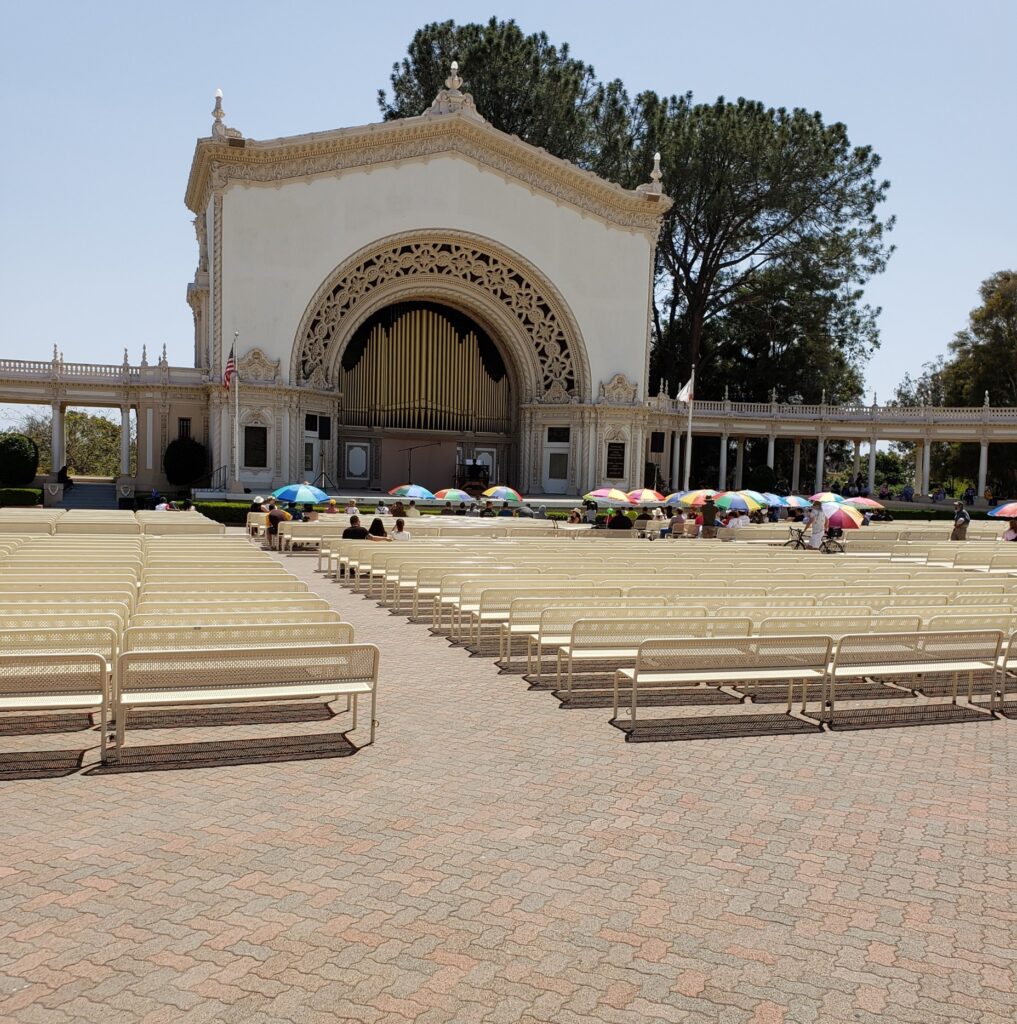
Guests arriving to the Spreckels Organ Pavilion in Balboa Park, San Diego

Even now, more than a month after the benefit, Prieto Ramírez continues to play the Ukrainian national anthem and wear the colors of Ukraine. “Every Sunday I’m starting with the National Anthem of Ukraine because of the nation and her people and what that means for the free world.”

At the concert April 24, their Earth Day celebration, Ukrainian soprano Belaya performed again. Members of the audience stood during the song and Belaya had her hand over her heart as she sang.

San Diego Civic Organist Raúl Prieto Ramírez and Ukrainian soprano Anna Belaya rehearsing

Before singing the national anthem, Belaya said, “I also want to add that today is Easter for our Orthodox brothers and sisters. On this special day I’m going to ask God only for one thing: to resurrect Ukraine from ruins, to save my nation from suffering and pain, to help us fight Russian invaders and to grant us peace.”

After the Ukrainian National Anthem was another Ukrainian song (listed only as “Ukrainian Song” in the program), which Belaya explained was written for a birthday of Kyiv. She said that it is a very important song to Ukrainians.

And following the two Ukrainian songs, Belaya left the stage while Prieto Ramírez explained what was next on the program: Queen’s “Bohemian Rhapsody.”

Categories
Uncategorized

The History of Earth Day

Earth Day is an annual event on April 22 to demonstrate support for environmental protection.

The first Earth Day was held on April 22, 1970, only in the United States. More than 50 years later, Earth Day has become a world-wide observance encompassing 1 billion people in more than 193 countries. This support has led to important legislation being passed to protect our planet, with countries working together to clean up what has already been done and prevent future damage. The United Nations selected Earth Day 2016 to sign the Paris Agreement, the most significant climate accord in the history of the climate movement.

While the pandemic caused the 50th anniversary celebrations to move online, people continue to work toward the goal of saving our planet. After all, it’s the only one we have!

Hear about how that first Earth Day got its start in the audio file.

Categories
Uncategorized

The Founding of St. Bonaventure University

Categories
Uncategorized

Assignment 7: Narcissism in the Christian Church

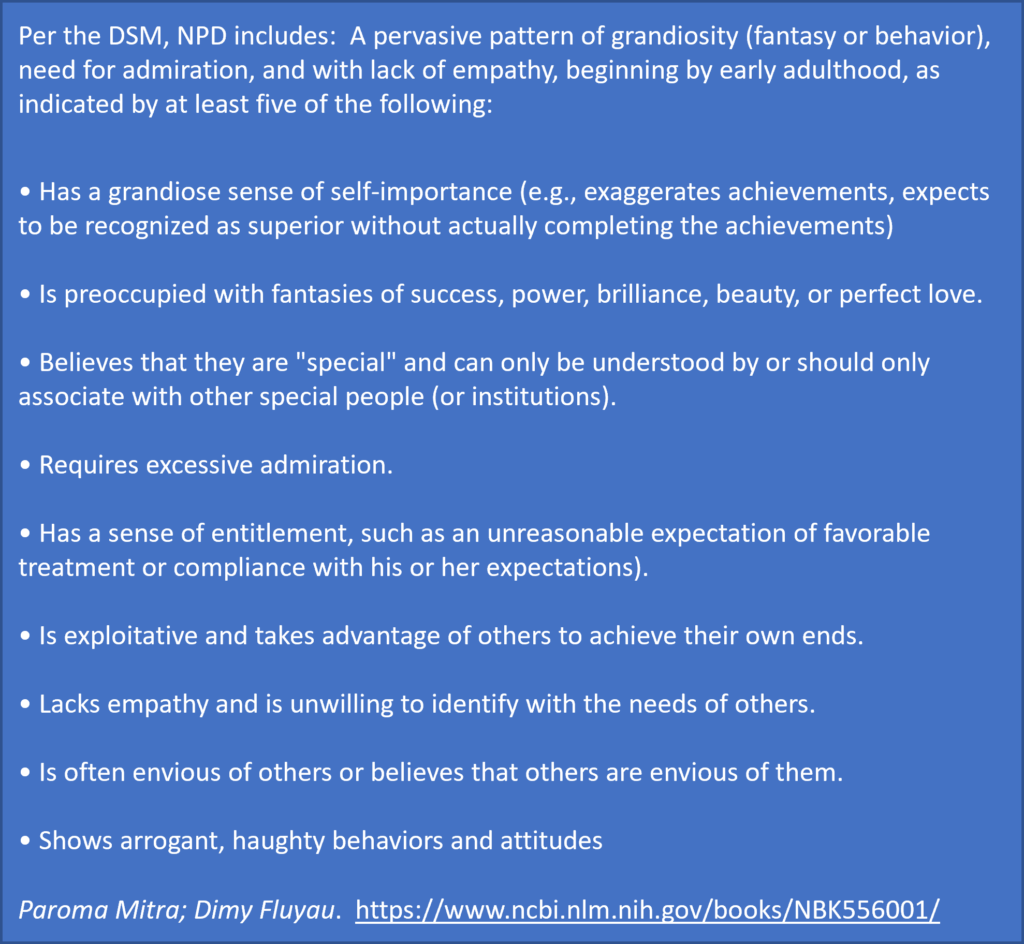
The term narcissism gets thrown around a lot in our selfie-obsessed culture, usually to describe someone who seems exceptionally self-centered. We use it when describing co-workers, bosses, celebrities, exes and even pastors. The term narcissist is derived from Narcissus, which comes from the Greek word narc meaning, “numbness.” Narcissists are oblivious to their own pain and the pain they inflict on others. Narcissism may be the current catchword, but it’s nothing new. Self-centered, arrogant, evil people have been around as long as humans have existed.

According to psychologist Dr. Patricia Lindquist, narcissism is a developmental stage in early childhood, lasting from the age of two until around five. “It is essential to self-concept, self-esteem, and ability to act in one’s own behalf independently. We have to ‘love ourselves’ in order to have the stamina and motivation to become an independent self.” This stage is mostly complete by the time an individual reaches the young adult stage.

The other, more problematic form of narcissism, often called “malignant narcissism,” is the version we are most familiar with. This person “intertwines themselves with others, unable to stand independently, and manipulates others to provide what is needed” Lindquist explains. “What makes it malignant is that it is not a whole relationship. It is a one-person relationship who contrives, manipulates, even gaslights others to obtain needed resources. This individual as an adult has many broken relationships, many frenemies, and is constantly ‘putting on a show’ in a charming way to lure others to him/her, to be discarded as soon as someone more exciting appears on the horizon.”

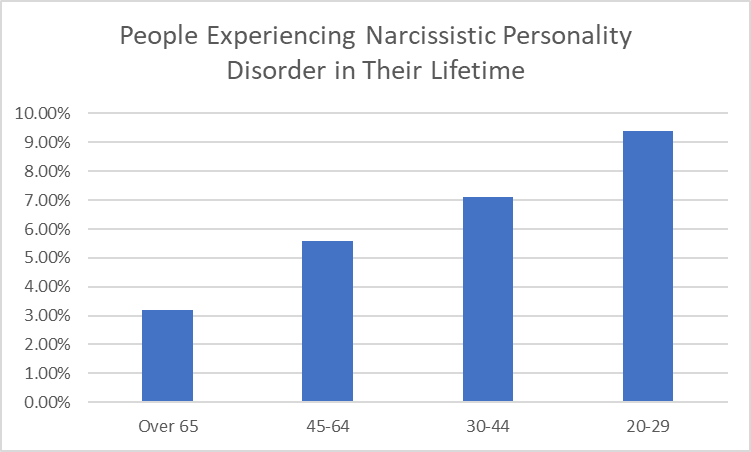
In their paper Birth Cohort Increases in Narcissistic Personality Traits Among American College Students, 1982–2009, Jean M. Twenge and Joshua D. Foster reported that approximately 70 percent of students today score lower on empathy and higher on narcissism than the average student 30 years ago.

Stinson, F. S., Dawson, D. A., Goldstein, R. B., Chou, S. P., Huang, B., Smith, S. M., et al. (2008). Prevalence, correlates, disability, and comorbidity of DSM-IV narcissistic personality disorder: Results from the Wave 2 National Epidemiologic Survey on Alcohol and Related Conditions. Journal of Clinical Psychiatry, 69, 1033-1045.

Narcissistic Leaders

If asked, most people would say that Jesus’ most important qualities were gentleness and compassion. He taught us to turn the other cheek when we are attacked. Christianity teaches us to follow the example of Jesus, so how can there be narcissism in churches and church leaders?

Manipulation may not seem like it belongs in a church, but there are many narcissists involved in churches. Some are the ordained leader—a priest, pastor, minister, reverend—and others are non-ordained leaders in the congregation. Lindquist believes that there is as much narcissism in the church as in the general population

It is easy to see why narcissists would be drawn toward ministry. As Chuck DeGroat, who is both an ordained minister and licensed therapist, explained during an Allender Center podcast in their narcissism series, “we give immense deference to people in pastoral ministry, pastoral power, because of position, title, authority, robe, clerical collar, and all the rest.”

In his paper Narcissistic Pastors and the Making of Narcissistic Churches, Darrel Puls wrote, “Narcissists require constant external admiration to be reassured of their self-esteem. The position of pastor would be quite attractive to those who crave such admiration, as it is central to the drama of worship and religious exercise.”

Puls continues that the position “offers continuous gratification through telling people how to live with holy writ for a guide, being an integral part of the joys and tragedies of life, being told people’s deepest fears and darkest secrets, being sought out for advice and counseling, and being invited to banquets and intimate dinners as the honored guest. Such glory and power might seem quite attractive to a narcissist.”

The Rev. Bekki Lohrmann described seminary as the set-up for narcissism. She said that students are constantly being told that they are the authority in the church, they are God’s conduit to the congregation, they are the spiritual leader of the congregation. What wouldn’t draw a narcissist in?

But church leaders aren’t all ordained. A narcissist might be the person controlling the money, wanting to decide where “their” money goes. It might be the council president, wanting to choose the direction the church will move in. It might be a music director or singer, wanting all attention focused on them and their gifts to the congregation.

The Rev. William Radatz pointed out that it’s a very human trait to believe that we are the center of the universe. “There is a tendency in all of us to want to step up and basically be God.” In an article for The Banner, DeGroat wrote, “Adam and Eve’s original temptation was to “be like God” (Gen. 3:5), transcending their God-ordained creatureliness.”

Bishop Andrew Taylor agreed, saying, “I think the root of sin is selfishness, and narcissism is just a part of selfishness. All of us tend to go back to our selfishness in a variety of ways.”

Sister Anne of the Mount Saint Benedict Monastery in Crookston, Minn. pointed out that it can be very hard to identify a narcissist. “We all have a little bit of it in us. A lot of people have a hard time admitting mistakes. You want to be fair. And most of us don’t have the training to recognize it.”

Narcissistic Church

But it isn’t just the leaders of the church who may be narcissistic. The church itself can sometimes be. Radatz says that for each person in the church, “there’s a balance of ‘what do I get out of this’ and ‘what good can I do?’ When the balance is off, there’s an issue. It becomes about reinforcing my beliefs and convictions rather than a place we are learning together.”

He also pointed out that all churches, particularly the more fundamentalistic churches, have a conviction of absolute right, that “we have the correct bent on the truth.” Yet we have seen that in trying to avoid sin, churches propagate sin, i.e., desiring to protect unborn children can lead to a callous disregard for women’s lives. 

“We have to be careful about how we understand who God is and how God is. If we in the church portray God as a figure who alone wants to be the center of our universe, who is alone the object of our admiration then we are casting God in a narcissistic image. And if we have a narcissistic God, then we can expect to find narcissism in the church,” Lohrmann explains.

Narcissism in the church has become an increasing concern. Puls’ paper was written in October 2020. DeGroat’s book, When Narcissism Comes to Church: Healing Your Community from Emotional and Spiritual Abuse, was published in March 2020.

One potential explanation for the increase in narcissistic churches is that church attendance is declining.

As Lohrmann expounded: “We know that apart from major personality disorders, narcissism is a natural byproduct of stress, struggle, and trauma. When we feel like we are falling, we naturally think of ourselves. Drowning people are not altruistic, they will steal lifeboats from each other in order to survive. The church right now is in a period of decline and so often it has turned congregations and leaders inward, reducing the mission of the church from a vibrant effort to share God’s love to a desperate effort to acquire new members for our own survival. And if this kind of narcissism is permeating church culture, then it will surely draw narcissistic leadership.”

What happens to churches that become narcissistic? The short answer is that they become cults. They become centered around a perceived powerful leader. The members follow their leaders in almost a cult-like way because of their own feelings of powerlessness, deficiency, insecurity.

According to Dr. Dan Allender of the Allender Center, shared in the episode of his podcast featuring DeGroat, people who feel disenfranchised gather around a particularly powerful leader. “They’re not going to come in and listen daily, weekly, to somebody who is offering a love-oriented, humble, spirit of servanthood-oriented approach to the Christian life. They want to hear we are in a war. We need to fight this war. We are being bombarded. In other words, it seems like narcissism has the ability to shift so quickly to a sense of victimhood.” Then they are willing to follow the leader anywhere.

Over time, members who see the narcissism will leave, which only strengthens the cult-like character of the church. Narcissistic pastors tend to surround themselves with their own “disciples” and the leadership becomes insular and self-serving. The staff suffers greatly. People who must deal with a narcissist must be in a constant state of alertness. The frequent chaos and instability create a continuous state of stress. This can lead to chronic illness, mental health problems and other symptoms related to constant trauma.

Lindquist shared that her husband, the late Rev. Jack Lindquist, “used to joke about having enough ego to ‘speak to God’ and proclaim God’s words, saying that anyone who did that had to be a little crazy.” Narcissistic people may not be crazy, but when they are in positions of leading people’s souls, they can inflict a lot of trauma.

In an interview by Jamie D. Aten Ph.D. for Psychology Today, DeGroat said, “When I think about how narcissism impacts the church, I’m immediately aware of the debris field of pain—broken relationships, vocational confusion, trauma symptoms, betrayals of trust, to name a few.”

Categories
Uncategorized

Assignment 6: Why Is Quilting Still a Thing?

What comes to mind when you think of quilting? A quilting bee of pioneer women on the prairie? You might be surprised to learn that quilting dates as far back as ancient Egypt. An ivory carving in the British Museum shows the first Egyptian Dynasty king wearing a quilted mantle. The Quilter’s Survey, conducted annually by Premier Needle Arts, estimates that there are 10-12 million quilters in North America as of 2021. Why is this still a thing?

Tradition

Peggy Cox of Stafford, Va. started sewing at an early age. Her grandmother in Germany sent kits that had cardboard pieces with yarn that was used to stich them together when Cox was around 4 years old.

“I’ve never counted how many quilts I’ve made. Probably in the thousands,” Cox said. Her grandmother told her, “you’ll never make as many as I do.” Her grandmother made quilts entirely by hand, and Cox makes them with modern sewing machines, but that conversation inspired Cox to not count how many quilts she made so that she would never truly know that she made more quilts than her grandmother.

Kris Smith of Galt, Mo. said that her grandmother was a quilter and taught her the basics. “I remember making a Barbie doll quilt at eight years old,” Smith said.

Judy Manza of Simsbury, Conn. didn’t learn from her grandmother, but says quilting is a connection to her grandmother, the first member of the family born in the U.S. “She was extremely poor. She would cut up old clothes to make them; she needed blankets for the family.”

An Expensive Hobby

No longer made from fabric scraps and rags, both Manza and Smith described quilting as an expensive hobby. “By the time you’ve purchased all your supplies and had it professionally quilted, each quilt can cost several hundred dollars,” Manza explained.

Many quilters, including Manza and Smith, sew their patterns, then send the quilt out to a long-arm quilter to put it together. Cox has her own long-arm quilter, so she does the complete quilt from start to finish.

A 2017 Quilting in America survey shows that quilters spend an average of $3,363 per year on quilting. Sewing machines can cost as much as $20,000.

Gift of Love

Cox, who can make up to 20 quilts per year, gives most to charity, donating the quilt itself or selling them and donating the proceeds. She made baby quilts for parents who had lost their babies when she worked at a hospital in Germany. She works with Quilts of Valor, an organization that awards quilts to service members or veterans. Cox has been making quilts for the children at an orphanage started by a friend in Kenya.

Smith has never sold a quilt; she makes them to give as gifts for weddings, birthdays, graduations, new babies. She hasn’t counted how many she has made, but says, “I can whip out a quilt in two to three days.” She has made one for each of her kids and grandkids. Currently she has 14 quilts waiting for her to tack down the binding.

Manza is much newer to quilting. She makes about one per year and has given all but two away: “It’s a real gift of love. I don’t have a huge repertoire, but I remember every one.”

Community

Quilting can be either a social or solitary activity. Manza speaks of the joy she gets attending classes at local quilt/fabric stores. Smith said that she and a friend go on road trips to quilt shops. She’s meeting more people and seeing more men who are quilting. Smith also reported that the most fun she had was when she was stationed in Japan while active-duty Air Force. Several Japanese ladies joined their quilting group and taught different techniques. “Quilting is worldwide.”

As Cox says, “There are so many different aspects of quilting. There’s traditional, contemporary, fabric art. Some are amazing, some are ‘what the hell is that?’”

Manza shared a story about when her son’s second-grade teacher did a cross-cultural study on quilts—the history, math and art. Parents were invited to bring in quilts for show-and-tell. She showed one her grandmother had made for her, pointing out her aunt’s shirt, her uncle’s tie, her grandmother’s apron. A girl in the class asked her, “When you wrap yourself up in your grandmother’s quilt, can you feel her love?”

Quilting is still a thing because it is an act of love, connecting the quilter to both the recipient and to their own family traditions. Manza describes quilts as “a perfect mix of art, functionality, and history. When you create any kind of artwork, especially visual, it will last forever.”

Categories
Uncategorized

Assignment 4: Homeless During COVID

While it is never easy to be homeless, the San Diego weather at least makes it a little more bearable. But when the COVID-19 pandemic led many organizations to shut down vital services, being homeless even in San Diego became more difficult.

In March 2020, the city of San Diego consolidated services, moving individuals already in shelters to the San Diego Convention Center. The goal was to allow for proper physical distancing to prevent the spread of COVID-19 as well as providing vital services to the people staying there.

Michael Cruz, supervisor of Case Management for Father Joe’s Villages, was working at their shelter when the decision was made to consolidate. Families were moved to hotel rooms while single men and women were moved to the Convention Center. “It was really good when we were at the Convention Center because we had a lot of services,” including mental health professionals and security.

But one year later, the city decided this was too expensive and closed the Convention Center. The goal was to move everyone who had been living there to existing shelters, so that none would have to return to living on the street. But in practice, it was not that simple.

Finding Shelter

Homeless people don’t usually have their birth certificates, social security cards or other forms of identification. Not having ID can mean not being able to get food stamps, get into a shelter, open a bank account, get disability benefits or even get a job. It’s hard for a homeless person to get these documents any time; during COVID it became even more of a challenge.

“One of the difficult things was when the Social Security office closed because clients need social security cards, ID,” said Cruz. “We were still able to provide vouchers to the DMV.”

To get a copy of a birth certificate, a person can go online, pay a fee and request a copy be sent to them. But the homeless don’t have regular internet access, money or mailing addresses. When the libraries closed, access to the internet was cut off for many.

The Third Avenue Charitable Organization, known more commonly by its acronym TACO, continued to assist people trying to get ID. Executive Director Susan Fleming explained that TACO pays the fees to acquire the documentation: “It’s a huge dent in our budget.”

Positive Side of the Pandemic

But while the pandemic provided unique challenges for the homeless, it also provided opportunities for organization that help them. “We were unbelievably blessed with a huge amount of donations in 2020,” said John Savidge, director of Ladle Fellowship, located at First Presbyterian Church.

Fleming reported that many people were donating the stimulus money that they had received. “People were saying ‘I don’t need this, so I wanted to give it to an organization that does.’” She anticipated their annual No-Show Gala, a fundraising “pretend” event, would raise $30,000. Instead, they received $50,000.

Fleming said that TACO was the only place in the area still giving out mail to their homeless clients and allowing them to charge their phones. “Word on the street travels fast. The number of people we see increased dramatically.”

Both Ladle and TACO began providing to-go meals outdoors when the pandemic began. They also limited the number of volunteers that assisted. But otherwise, it was business as usual. “Nothing was disrupted with the exception of the building being closed,” explained Savidge.

“For TACO, even though this horrible pandemic was going on, it allowed for us to grow,” said Fleming. “We’ve found ways to make it beneficial for clients, which has helped TACO too.” They went from serving meals twice per week to serving meals four days a week, as well as handing out Starbucks sandwiches provided through their partnership with Feeding San Diego on a fifth day. Their low-key clothing giveaway became larger as word spread.

Savidge explained that while Ladle didn’t really grow during the pandemic, they focused on their core services which he calls “the four M’s”: message, music, mentoring and medical. They have not yet re-started Bible study, but the San Diego Street Choir has begun rehearsing again, and staff and volunteers are continuing to assist their guests with both mental and physical health needs.

Cruz summed up how nonprofits are handling the pandemic best: “We’re being adaptable, flexible, rolling with the punches.” And they will continue to do so to the best of their ability, even in challenging times.

Categories
Uncategorized

Assignment 2: Choir During COVID

English composer and conductor John Rutter said, “You express, when you sing, your soul in song. And when you get together with a group of other singers, it becomes more than the sum of the parts.” To accomplish this during COVID, choir directors have had to be creative.

At the beginning of the pandemic, the public found out just how easily singing could spread the virus through the experience of the Skagit Valley Chorale, one of the first superspreader events in the country. For their rehearsal on March 10, 2020, the group believed that keeping socially distant would be enough to keep members safe. But within a few weeks, 52 of the 61 people who came to the rehearsal were diagnosed with COVID-19, and two died.

An international coalition of performing arts organizations commissioned a study on the risks of in-person rehearsals. Based on the results, the group developed rehearsal safety guidance, which included wearing masks, remaining socially distanced, limiting rehearsal time, and providing ample time between rehearsals to allow the air to be cleared or rehearsing outdoors.

It seemed safest to move everything online. Schools moved to online learning, which provided additional challenges for performing arts classes. Jenn Opdahl, choir teacher at Olympian High School in Chula Vista, Calif., explained, “Students were muted, not showing video and we were not allowed to require the screen to be on. The energy, emotional connection, being part of a whole disappeared.”

Tracy Burklund, adjunct professor in the music department of Southwestern College, also in Chula Vista, said, “It’s really challenging to have more than one voice singing at the same time because of latency.” Variations in the speed and quality of the students’ devices meant the singers were not together or with the accompaniment.

One approach is to have the group mute their microphones, which is self-defeating because the instructor can’t hear the student. Burklund explains that having a single student sing is fine, but in a larger group, musicality is lost. “You lose the experience of being in choir.”

There’s no easy way for choirs to perform online. “Everybody and their dog would tell people, ‘Oh, you’re in choir? You should do a virtual choir,’ with no idea what it takes,” Opdahl said. She explained that she has the skills but not the time, and the varying quality of what comes from the students makes it a challenge. Also, it’s cost-prohibitive to contract it out—a 45-second clip could cost around $700.

Opdahl’s students did a cabaret-style performance online at the end of the last school year. Each student picked out a song, then the accompanist would record a track for them to sing along with. But that’s not choir.

Initially churches moved to online services. Many held services outdoors for months to minimize the risk. As they’ve moved indoors, safety guidelines have varied greatly, from having the choir be spaced out and all wearing masks to no precautions at all. Some churches still have not restarted singing at all.

There is still space though. “Churches did such a good job of pivoting to online services, people aren’t coming back,” Ron Bolles said. This means that it is easier for congregations to spread out for safety.

Bolles has been a choir director in public schools, churches and the community for more than 50 years. At the start of the pandemic, he was the worship and arts director at La Jolla Presbyterian Church and director of the San Diego Street Choir.

The San Diego Street Choir stopped all rehearsals for more than a year. First Presbyterian Church of San Diego, where they rehearse, refused to mandate masks, but the choir leadership required them. “If someone came in without a mask, we’d slap one on. They did it. They hated it. We all hated it,” Bolles explained.

Burklund is co-vocal music director for Southwestern’s production of the musical “The Addams Family.” She said that with the current surge in the area, the school wanted to move everything back online. Her response was to limit the size of the cast, split them into groups to rehearse separately and do rapid testing prior to rehearsals.

Even with these precautions, students are still masked and distanced. “It’s difficult for me to hear the students when they’re so far away and muffled,” Burklund explained.

Opdahl described another problem with masks: “If you drop your jaw open to get space to sing, the mask moves and doesn’t cover the mouth.” In addition, “I can’t see their technique, but at least I can hear them. I also can’t demonstrate.”

Almost two years into the pandemic, many choirs are striving to get back to actually singing together. With the emerging variants, there’s no way to know when that might happen.

css.php